
Toyota Automated Logistics combines Bastian Solutions, Vanderlande’s warehousing business, and viastore under one unified brand.

We deliver innovative warehouse automation solutions that enable our customers to achieve a sustainable competitive advantage.

Search toggle

Warehouse Automation Solutions for Food and Beverage Distribution

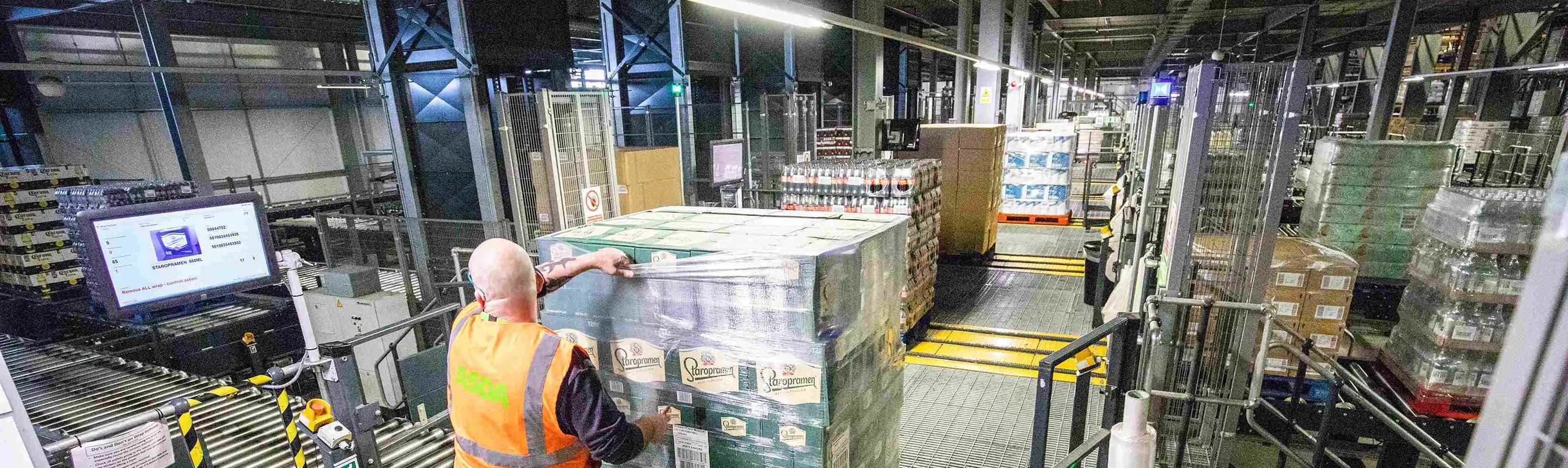
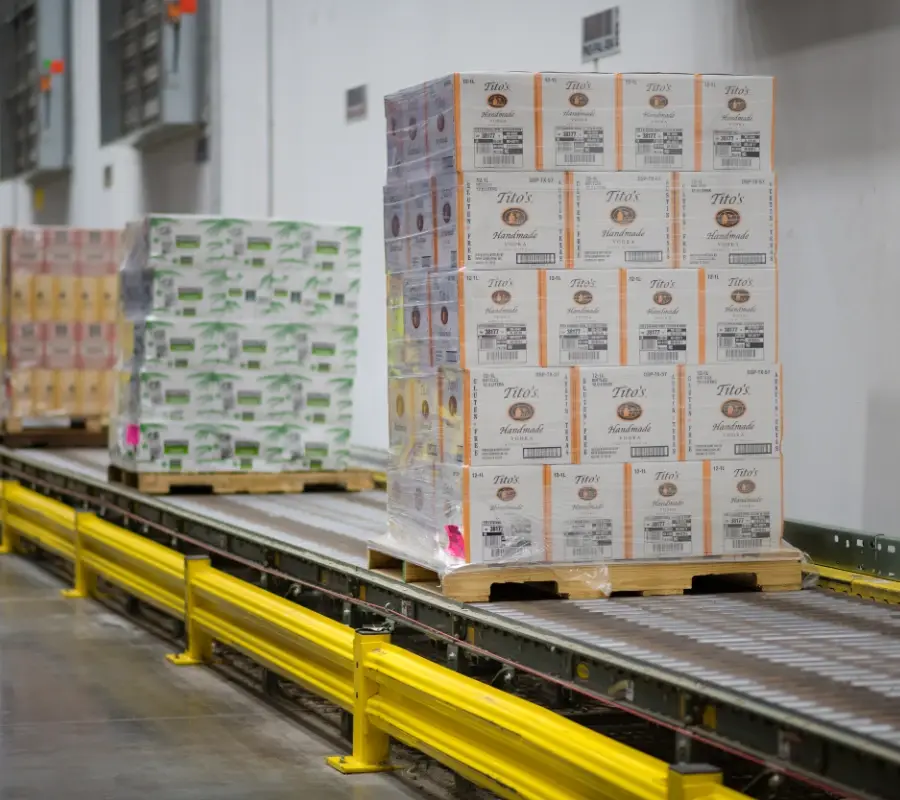
Pallets move on an automated conveyor system in a beverage distribution warehouse.

Food and beverage distribution requires highly precise, fast-moving operations that consistently meet strict safety and compliance standards. From ambient warehouses to sub-zero freezer environments, every operation must maintain product integrity while meeting tight delivery windows.

Toyota Automated Logistics partners with food and beverage companies to deploy automation systems engineered for the industry's unique challenges. Our solutions manage temperature-controlled logistics, support complex inventory requirements, and reduce reliance on labor in challenging cold storage environments.
Overview

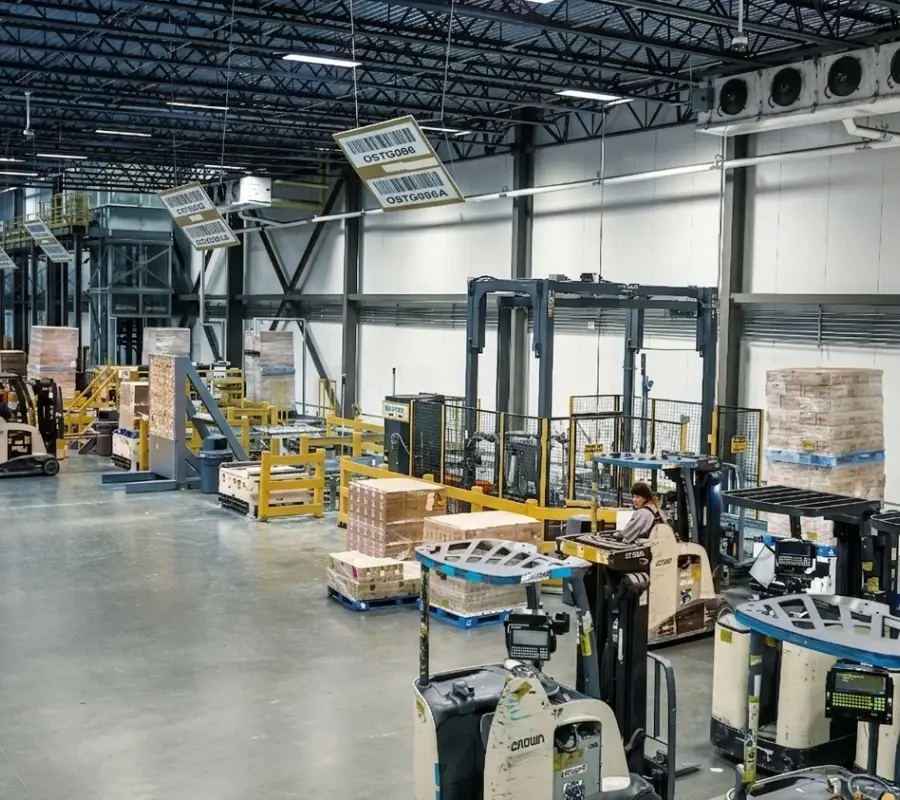
Automated warehouse floor for food and beverage distribution featuring automated pallet handling, forklifts and palletized inventory.

What it is: Integrated warehouse automation systems designed for food and beverage distribution. These include conveyor systems and automated vehicles for product transport, AS/RS for cold storage, automated palletizing, and inventory management systems with lot tracking and FEFO compliance.

Why it matters: Food and beverage distributors must protect product integrity while meeting regulatory obligations and delivering fresh products on tight timelines. Labor challenges in cold environments also make automation essential.

How we help: Toyota Automated Logistics designs automation solutions that perform reliably in any temperature environment while supporting food safety compliance and consistent supply chain throughput.

Capabilities

Cold Storage AS/RS Systems

Automated Storage and Retrieval Systems can be effectively integrated into cold storage environments. High-density storage in this category reduces the facility footprint needed to maintain temperature, significantly cutting energy costs. Automated retrieval eliminates the need for workers to spend extended periods in sub-zero conditions.

AGVs and AMRs for Temperature-Controlled Environments

AGVs and AMRs are engineered to operate reliably across temperature zones, from ambient to freezer. These systems support product transport and zone-to-zone movement while minimizing door openings and temperature fluctuations.

Automated Palletizing and Depalletizing

Robotic systems can build and break down pallets with consistent accuracy. Mixed-SKU palletizing supports store-ready delivery, while automated depalletizing accelerates receiving and replenishment processes.

FEFO-Compliant Inventory Management

Automation systems integrated with WMS can automatically enforce First Expired, First Out (FEFO) rotations. Lot tracking, date code management, and expiration alerts ensure compliance with food safety requirements and minimize waste.

Conveyor and Sortation Systems

High-throughput conveyor and sortation systems can be engineered for food and beverage environments where consistent material flow and hygienic operation are critical. Sanitary system designs support efficient cleaning practices and compliance with food safety regulations.

Key Benefits

Reduced Cold Storage Labor Exposure

Minimize worker time in refrigerated and frozen environments by automating repetitive tasks.

Improved Food Safety Compliance

Reduce compliance risk and simplify audits with automated systems that support FEFO rotation, temperature accountability, and end‑to‑end traceability.

Higher Storage Density

Reduce refrigeration and energy costs with automated storage systems that improve storage density compared to traditional racking.

Consistent Throughput Across Conditions

Automation maintains productivity regardless of temperature, season, or staffing challenges.

Reduced Product Damage and Waste

Reduce damage, spoilage, and waste with gentle handling and optimal storage conditions that protect product quality and provide FEFO compliance.

Faster Order Fulfillment

Accelerate case picking and order assembly to meet tight delivery windows. Same-day and next-day fulfillment becomes achievable even for temperature-sensitive products.

Comparison: Manual vs. Automated Food & Beverage Distribution

Distribution Factor Manual Operations Automated Distribution
Cold Storage Labor Extended worker exposure Minimal human presence
Storage Density 40-50% cube utilization 80-90% cube utilization
Reliability Performance varies with temperature, staffing and fatigue Stable, predictable throughput across all conditions
Throughput Limited by labor availability Consistent 24/7 capacity
Energy Efficiency Standard consumption 20-30% reduction possible
Product Damage 2-5% typical Under 1% achievable

Applications

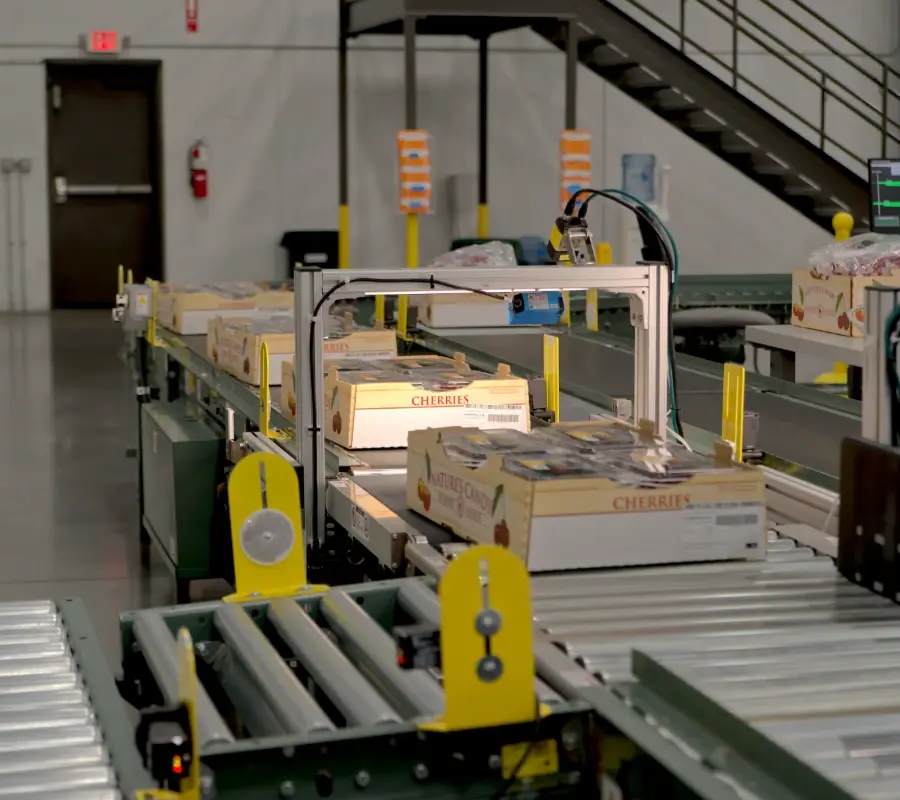
Automated conveyor system for food processing facility

At Toyota Automated Logistics, food and beverage automation supports a wide range of distribution environments, each with its own operational pressures and handling requirements. From temperature-controlled storage to high-volume order fulfillment, these facilities rely on automation to protect product quality, maintain compliance, and sustain consistent throughput.

The following applications highlight how tailored automation solutions enable reliable performance across diverse food and beverage operations.

  • Refrigerated Distribution Center
  • Frozen Food Warehouse
  • Beverage Distribution Facility
  • Grocery E-Commerce Fulfillment
  • Foodservice Distribution
  • Bakery and Fresh Food Distribution

Frequently Asked Questions

Can automation systems operate reliably in freezer environments?

Yes. Our cold storage automation is engineered for temperatures as low as -20°F (-29°C). Components are rated for freezer operation, and systems are designed to minimize condensation and ice buildup.

How does automation improve food safety compliance?

Automation enforces First Expired, First Out (FEFO) rotation automatically, eliminating the human errors that cause compliance issues and product waste. Systems maintain complete lot traceability, temperature logging, and date code verification. Audit trails are generated automatically, simplifying regulatory inspections and recall procedures if needed.

How do automated systems handle the variety of food and beverage packaging?

TAL automation accommodates diverse packaging formats, including cases, trays, bags, bottles, and bulk containers. Our engineering team assesses your product mix and designs customized handling systems appropriate for each packaging type.

Can automation support mixed-temperature shipments?

Yes. TAL designs systems that manage multiple temperature zones within a single facility and can consolidate orders from ambient, refrigerated, and frozen areas. Automated systems minimize the time products spend outside their optimal temperature range during order assembly.

How does AS/RS reduce energy costs in cold storage?

AS/RS increases storage density significantly, reducing the cubic footage that must be refrigerated. Fewer door openings and tighter temperature control further reduce energy consumption.

What ongoing support does TAL provide for food and beverage automation?

TAL provides comprehensive lifecycle support, including preventive maintenance, remote monitoring, 24/7 technical support, and spare parts management. Service agreements are structured for food and beverage operations, with response time commitments that protect your cold chain.

Navigate Your Automation Decisions with Confidence

Partner with our experts to evaluate your operations and identify reliable automation opportunities that scale with your business.