
Toyota Automated Logistics combines Bastian Solutions, Vanderlande’s warehousing business, and viastore under one unified brand.

We deliver innovative warehouse automation solutions that enable our customers to achieve a sustainable competitive advantage.

Search toggle

Industrial Robotics

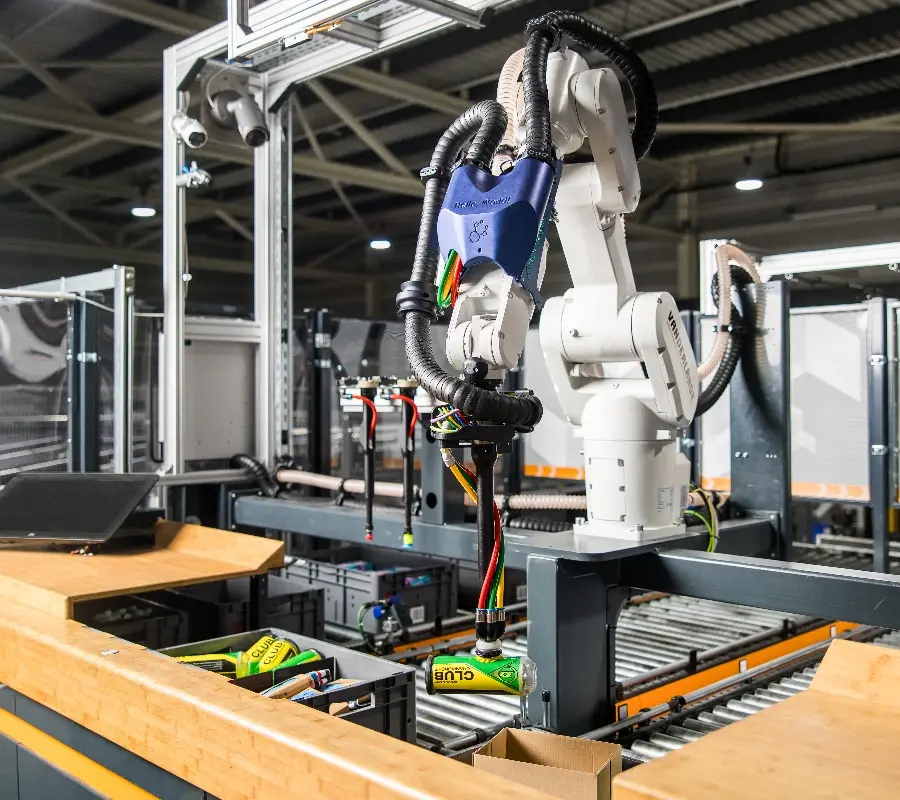
White industrial robot perform automated piece picking.

Industrial robotics deliver consistent, high-performance automation for warehouse and distribution operations. Designed to execute repetitive tasks with precision and endurance, robotic systems improve throughput, reduce labor dependency, and eliminate variability caused by manual handling.

Toyota Automated Logistics designs, integrates, and supports industrial robotic solutions tailored to material handling and fulfillment environments. From palletizing and picking to machine tending and inspection, our team engineers robotic systems that align with your operational goals — whether that’s stabilizing output, improving safety, or scaling automation over time.
Overview

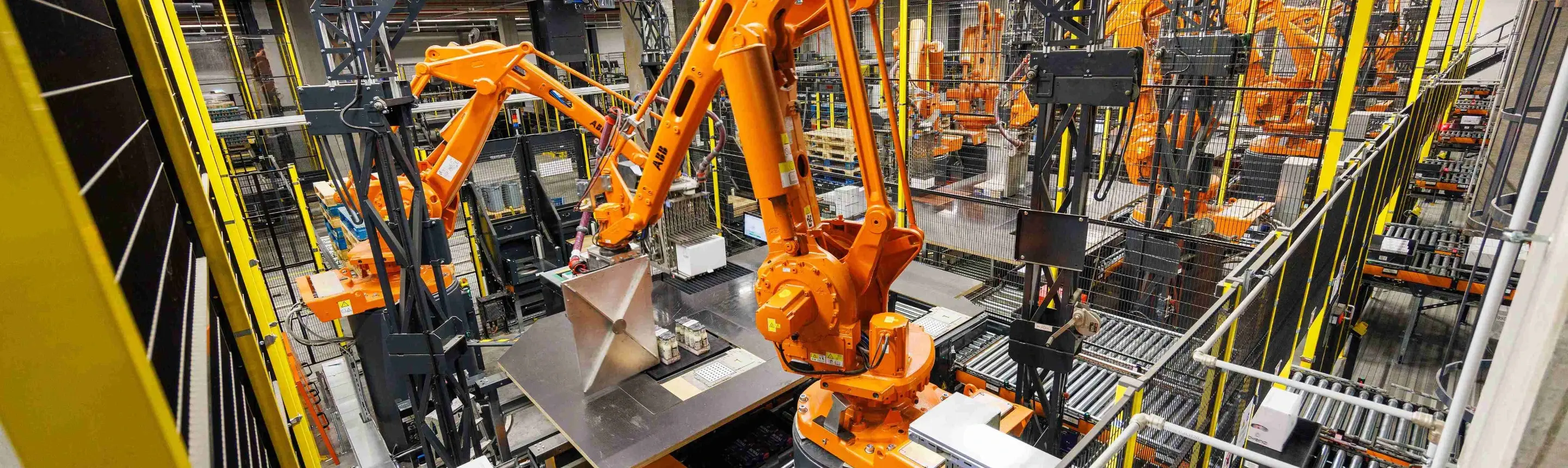
An automated robot arm handles crates and pallets on a conveyor system in an industrial warehouse.

What it is: Industrial robots are programmable machines that perform material handling, picking, packing, palletizing, and inspection tasks with repeatable accuracy.

Why it matters: Robotics eliminates ergonomic injuries, maintains consistent cycle times across shifts, and supports throughput levels that are difficult to sustain with manual labor.

How we help: Toyota Automated Logistics analyzes your workflows, payload requirements, and facility constraints to design and integrate the right robotic solution — complete with safety systems and controls integration.

Capabilities

Packing and Order Processing

Boost accuracy and reduce repetitive strain with robotic systems that handle case packing, high-speed pick and place, buffering, and vision-guided piece picking. These solutions streamline non-ergonomic tasks and keep orders moving efficiently.

Palletizing and Depalletizing

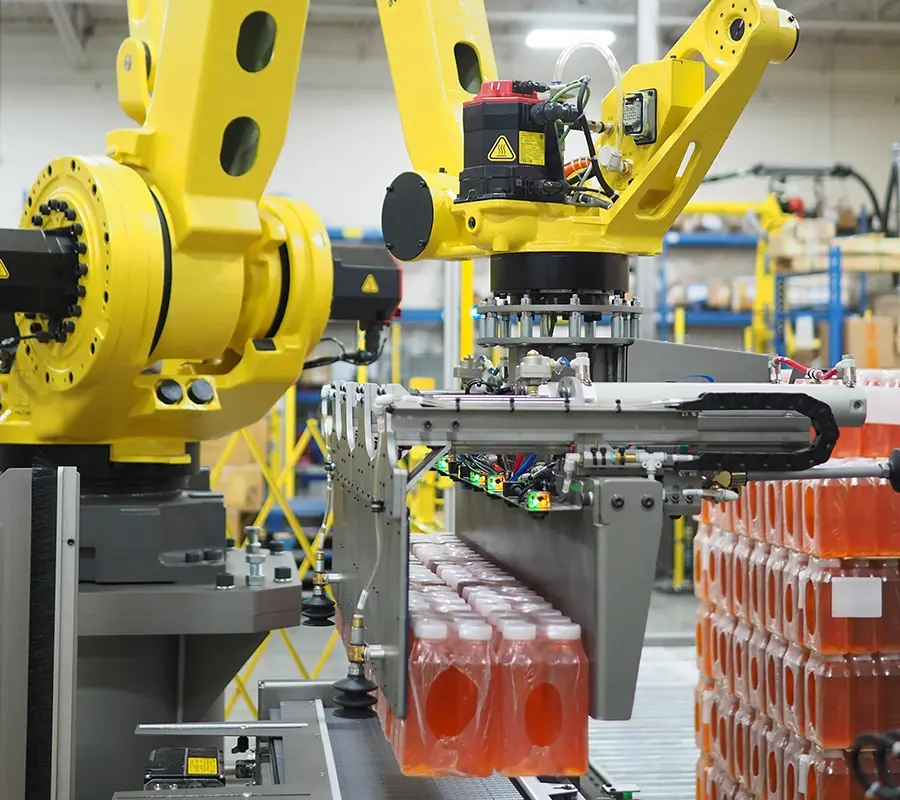
Accelerate replenishment and end-of-line throughput with robots that handle cases, layers, bags, and mixed SKUs with speed and consistency. Flexible tooling adapts to varying shapes, sizes, and materials for reliable pallet building and break-down.

Learn more about palletizing and depalletizing

Loading and Unloading

Utilizing custom designed end of arm tools, robotic loading and unloading equipment reliably transports, distributes or manipulates products. Includes machine tending, robotic truck loading, and robotic monorail loading and unloading.

Collaborative Robots (Cobots)

Introduce flexible automation that works safely alongside your team. Cobots support low-throughput machine tending, inspection, and assisted assembly with minimal guarding and fast redeployment.

Mobile Warehouse Robots & Autonomous Vehicles

Increase productivity and reduce travel time with autonomous vehicles that safely transport products across your facility. Scalable and cost-effective, these systems enhance working conditions and grow with operational demand.

Learn more about AGVs and AMRs

End-of-Arm Tooling

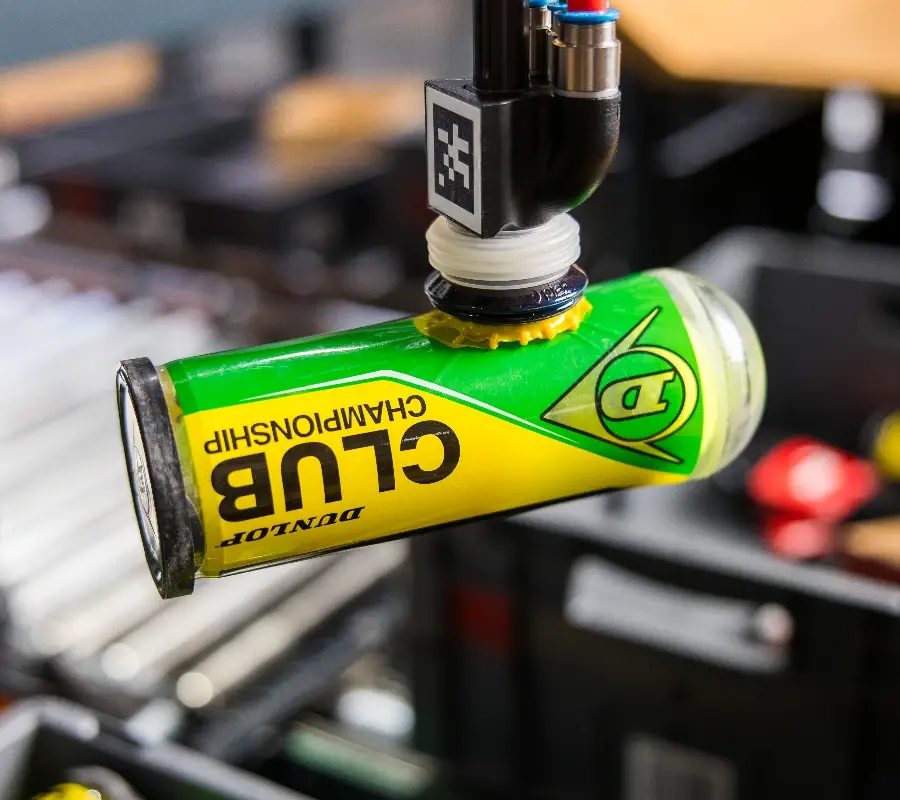
End-of-arm tooling defines what a robot can handle and how, using mechanical grippers for rigid parts or vacuum grippers for flat and porous materials. Custom, sensor-enabled, and quick-change tools allow a single robot to handle multiple products, adjust grip force, and switch tasks reliably without manual intervention.

Benefits

Consistent Quality and Precision

Robots can execute the same programmed movements every cycle, delivering uniform quality and repeatable accuracy that manual operations cannot sustain.

Continuous Operation Capacity

Industrial robots operate 24/7 with scheduled maintenance intervals measured in thousands of hours. This provides sustained throughput impossible with human labor constraints.

Improved Safety and Ergonomics

Automating repetitive lifting, reaching, and twisting removes workers from high-risk tasks and significantly reduces injury exposure.

Throughput Expandability

Adding robot cells provides linear capacity increases without the recruitment, training, and management overhead of workforce expansion.

Reduced Labor Dependency

Robotics stabilize operations in tight labor markets and allow available workers to focus on higher-value oversight and exception handling.

Reduced Product Damage

Controlled motion and consistent grip force minimize drops, crushing, and handling errors common in manual processes.

Operational Visibility and Data Insights

Robotic systems automatically capture performance data, enabling continuous improvement, diagnostics, and proactive maintenance planning.

Flexible Automation

Robots can be reprogrammed for new products, layouts, or workflows through software changes—without major mechanical reconfiguration.

Applications

piece picking conveyor system

Toyota Automated Logistics evaluates robotic opportunities based on task repetition, payload, precision, and throughput requirements. Common robotics applications include:

  • Palletizing and depalletizing
  • Order fulfillment picking
  • Case packing and unpacking
  • Machine tending
  • Quality inspection and verification
  • Truck loading and unloading

Frequently Asked Questions

How do warehouse robots improve ROI?

Robots boost ROI by increasing throughput, improving accuracy, and reducing labor-intensive travel and handling. They help teams do more with the same footprint, stabilize performance during peak periods, and cut costs tied to errors, ergonomics and turnover. With scalable deployment options, automation delivers fast efficiency gains and long‑term operational resilience.


How do collaborative robots differ from traditional industrial robots?

Collaborative robots use built‑in sensors to detect unexpected contact and stop instantly, allowing them to work safely alongside people without extensive guarding. They’re designed for flexible, lower-throughput, human‑centric workflows. Traditional industrial robots deliver higher speeds and payloads but require cages, light curtains, or other safety systems to separate personnel from fast‑moving equipment.

Can existing robots be repurposed for different tasks?

Yes, many robots can be reprogrammed for new work as long as the payload, reach, and speed fit the application. End‑of‑arm tools may need updates to handle different products, and some cells require layout changes. Repurposing can be as simple as a software tweak or as involved as new tooling and integration, depending on the task shift.

What safety systems are required for robot installations?

Traditional robots rely on fencing, light curtains, or scanners to keep people clear of high‑speed movements. Collaborative robots use force‑ and speed‑limited designs, often requiring only marked work zones. A risk assessment defines the right level of protection for the robot’s capabilities and the application.

How do vision systems improve robot performance?

Vision enables robots to pick parts without precise fixturing, identify mixed products, inspect quality, and track items on moving conveyors. While it adds some complexity, vision dramatically increases flexibility and reduces mechanical handling requirements.

Navigate Your Automation Decisions with Confidence

Whether you're evaluating a single technology or planning a complete automation strategy, we help you choose reliable solutions that scale with your business.