
Toyota Automated Logistics combines Bastian Solutions, Vanderlande’s warehousing business, and viastore under one unified brand.

We deliver innovative warehouse automation solutions that enable our customers to achieve a sustainable competitive advantage.

Search toggle

Automated Internal Transport Solutions

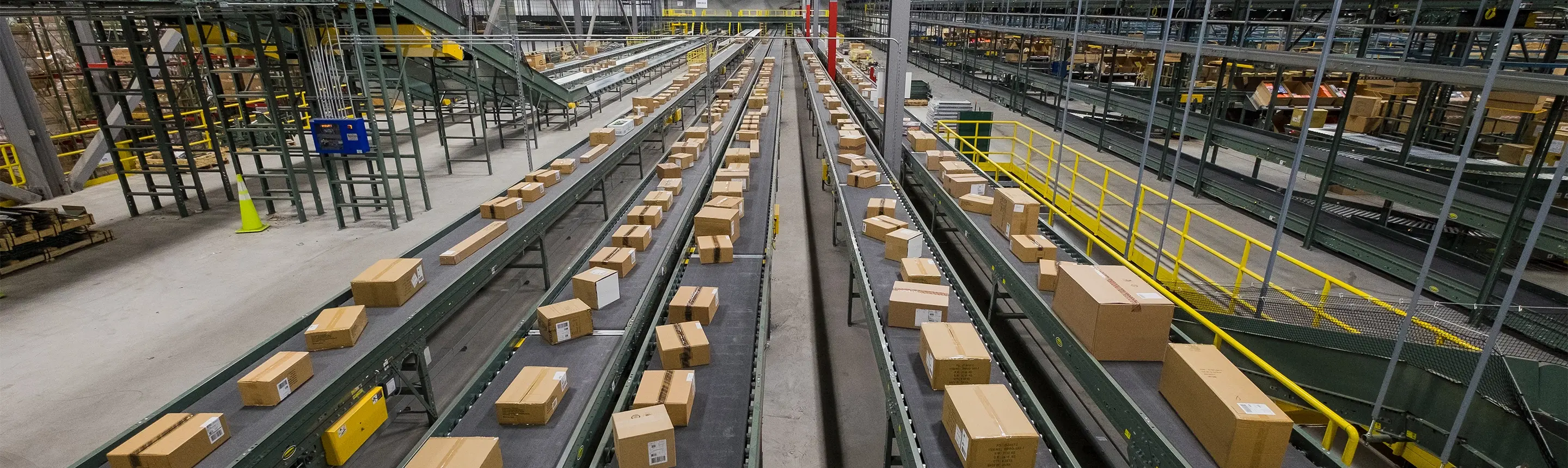
automated-warehouse-conveyor-sortation-system

Internal transport connects every operation in your facility, from receiving to storage, storage to production, and production to shipping. When material movement depends on manual labor, forklifts, and human coordination, bottlenecks form, labor costs rise, and throughput becomes unpredictable.

Toyota Automated Logistics designs and integrates automated transport systems that keep materials flowing continuously. We deploy AMRs, AGVs, conveyors, and sortation systems that eliminate transport delays, reduce labor dependency, and give you real-time visibility into material flow across your entire operation.
Overview

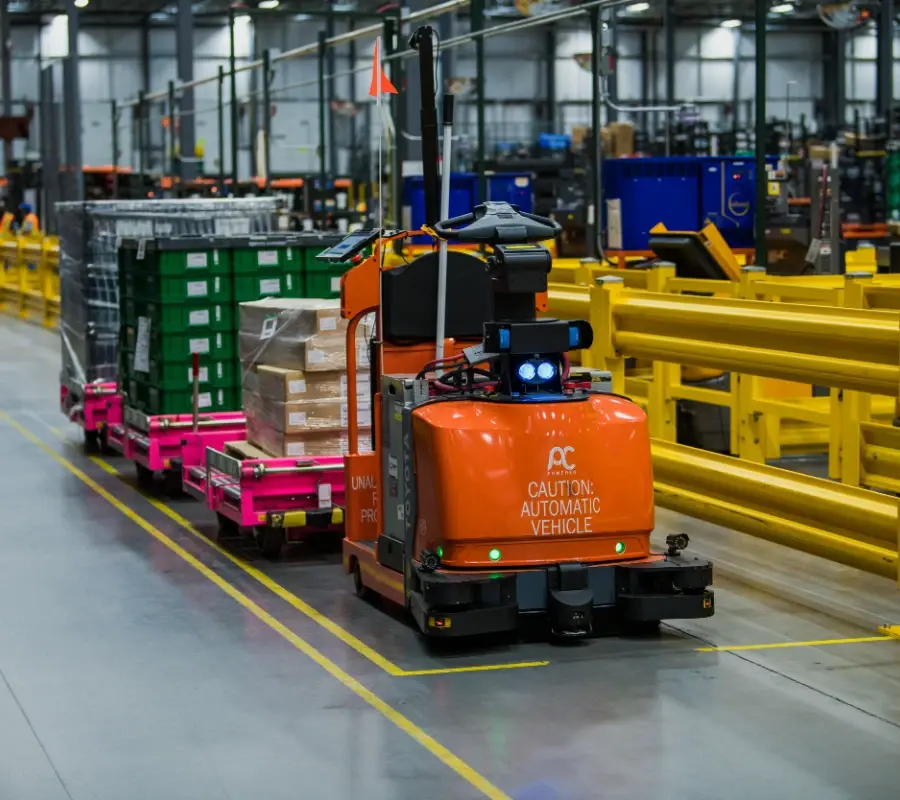
Toyota automated warehouse vehicle towing carts of inventory through a large distribution center.

What it is: Internal transport encompasses all material movement within a facility. This includes transferring goods between receiving, storage, production, picking, packing, and shipping areas using conveyors, vehicles, and robotic systems.

Why it matters: Manual transport relies on forklift operators and cart pushers who create variable throughput, safety risks, congestion, and labor costs that scale linearly with volume.

How we help: TAL analyzes your material flow patterns, identifies transport bottlenecks, and designs automated systems that deliver consistent throughput with fewer labor hours and safer operations.

Capabilities

Conveyor Network Integration

Belt, roller, and overhead conveyor systems provide continuous flow for cases, totes, and individual items. TAL designs conveyor networks that connect workstations, zones, and shipping lanes with minimal manual touchpoints.

Sortation and Routing Systems

Automated sortation diverts materials to correct destinations based on barcode, RFID, or system instructions. High-speed sorters handle thousands of units per hour with near-perfect accuracy.

AMR Deployment for Flexible, Reliable Transport

Autonomous mobile robots navigate dynamically through your facility, transporting totes, cases, and carts between any two points without fixed infrastructure. AMRs adapt to changing layouts and can be redeployed as workflows evolve.

AGV Systems for Fixed-Route Movement

Automated guided vehicles move goods along fixed, predefined routes with high repeatability. AGVs excel at high-volume corridors where consistent transport is required between fixed locations.

Fleet Management and Traffic Coordination

Central software manages all automated vehicles by assigning tasks, improving routes, preventing collisions, and balancing workloads. Real-time dashboards show vehicle status, queue depths, and transport performance metrics.

Line-Side Delivery and JIT Replenishment

Automated systems deliver materials to production stations exactly when needed, eliminating buffer inventory and ensuring lines never stop waiting for parts. Triggers from production systems initiate replenishment automatically.

Key Benefits of Internal Transport Automation

Increased throughput

Automated systems move materials continuously without breaks, shift changes, or fatigue-related slowdowns.

Reduced labor costs

Fewer forklift operators and material handlers are needed as vehicles and conveyors handle repetitive transport tasks.

Improved safety

Removing manual forklifts from high-traffic areas reduces collision risks, pedestrian incidents, and product damage.

Predictable material flow

Automated transport delivers consistent cycle times that enable accurate planning and scheduling.

Real-time visibility

Software systems track every load, vehicle, and transport task for complete operational transparency.

Expandable capacity

Add vehicles or conveyor segments to increase throughput without proportional labor increases.

Comparison: Manual vs. Automated Receiving

Feature Manual Transport Automated Transport
Throughput consistency Variable based on operator availability Consistent cycle times
Labor requirement Scales linearly with volume Fixed fleet handles surges
Safety risk Forklift collisions common Sensors minimize risk
Visibility Limited tracking Real-time status
Operating hours Limited by staffing 24/7 operation
Expandability Requires hiring Add vehicles to expand

Applications

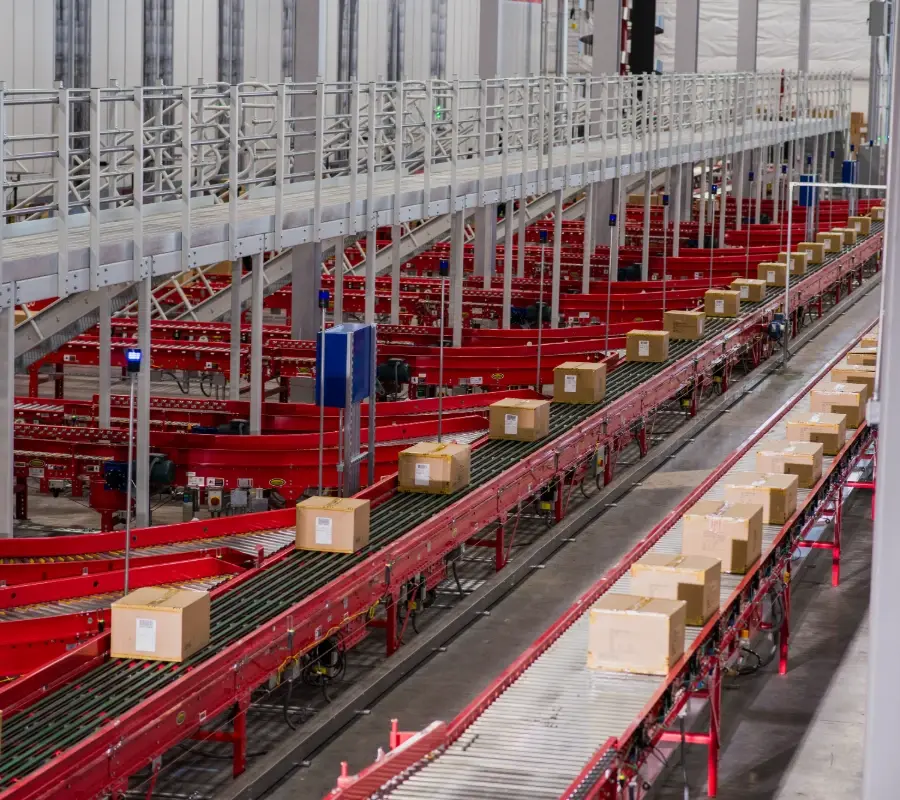
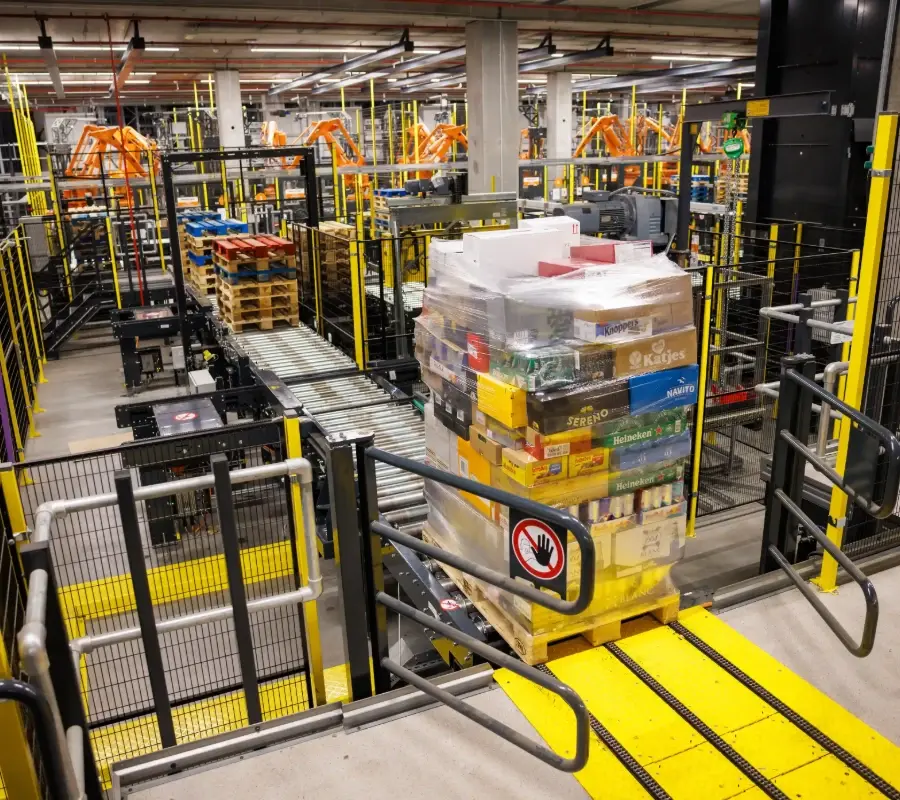
Automated conveyor system moving a shrink-wrapped pallet through an industrial distribution center facility.

Automated internal transport applies wherever materials move between facility zones. TAL designs transport automation for diverse operational environments.

  • Distribution centers moving goods between receiving, storage, and shipping
  • Manufacturing plants delivering components to assembly lines
  • E-commerce fulfillment transporting inventory between picking and packing
  • Cross-dock facilities moving freight directly to outbound staging
  • Cold storage operations reducing worker exposure to freezer environments

Frequently Asked Questions

How will automating internal transport processes change our current workflow?

Automated internal transport streamlines the movement of goods across your facility by replacing manual walking, forklift driving, and cart pushing with coordinated flows powered by AMRs, AGVs, conveyors, and sortation systems. These technologies move materials predictably and continuously, reducing delays and freeing your team to focus on higher-value tasks. The result is smoother operations, fewer bottlenecks, and more consistent throughput across production, storage, and shipping.

How do automated transport systems integrate with existing operations?

TAL designs phased implementations that run alongside manual processes. AMRs can operate in mixed environments with forklifts, and conveyor segments can connect to manual workstations during transition periods.

What types of products can automated transport systems handle?

Our solutions can move everything from pieces, parcels, small totes and cartons to pallets, WIP materials, and finished goods. We match the right transport technology to your product mix and operational needs.

How flexible are these systems if our processes or volumes change?

Modern automated transport platforms are built for adaptability. AMRs can be re-routed through software, AGVs can be reprogrammed for new missions, and conveyor or sortation lines can be expanded or reconfigured as workflows evolve. Whether you're adding new production lines, shifting SKU profiles, or experiencing seasonal volume swings, the systems can be adjusted to meet your needs.

Strengthen Every Stage of Your Operation

Partner with our experts to evaluate your workflows and identify reliable automation opportunities that scale with your business.