
Toyota Automated Logistics combines Bastian Solutions, Vanderlande’s warehousing business, and viastore under one unified brand.

We deliver innovative warehouse automation solutions that enable our customers to achieve a sustainable competitive advantage.

Search toggle

Warehouse Automation Solutions for Grocery & Food Retail

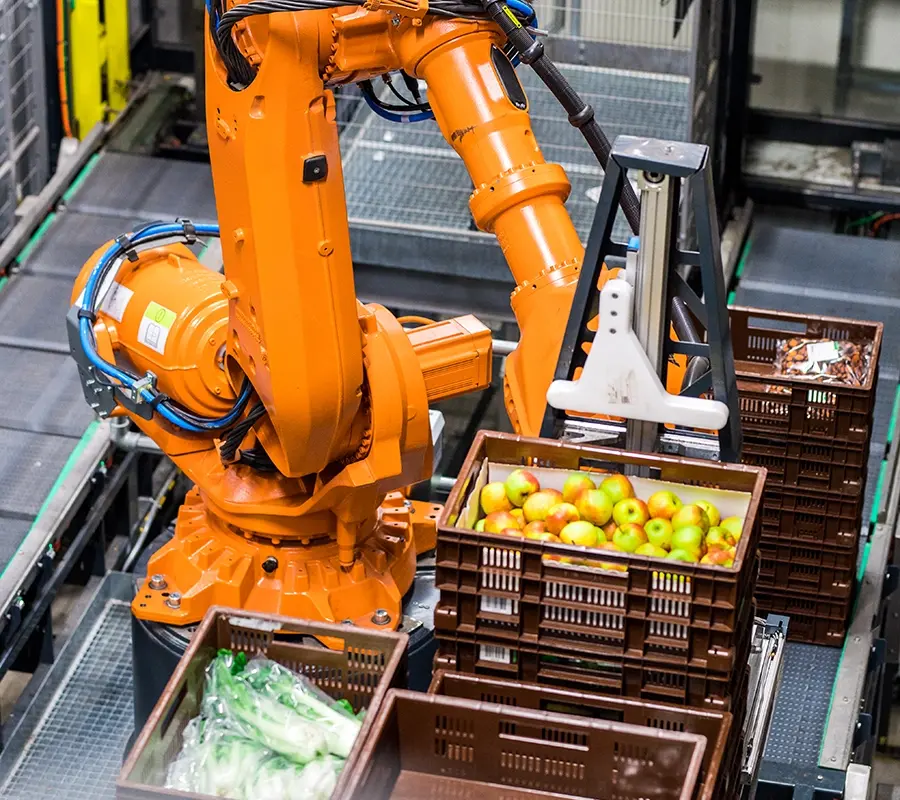
robotic picking for grocery food beverage distribution automation

Grocery and food retail distribution operates on thin margins with little tolerance for error. Freshness, food safety compliance, and on-time store replenishment are critical, while the rapid growth of e-grocery has added new fulfillment complexity and labor pressure.

Toyota Automated Logistics designs, integrates, and supports warehouse automation solutions purpose-built for grocery and food retail operations. From regional distribution centers to micro-fulfillment centers, our team delivers systems that support multi-temperature environments, accelerate order fulfillment, and maintain product quality across the cold chain.
Overview

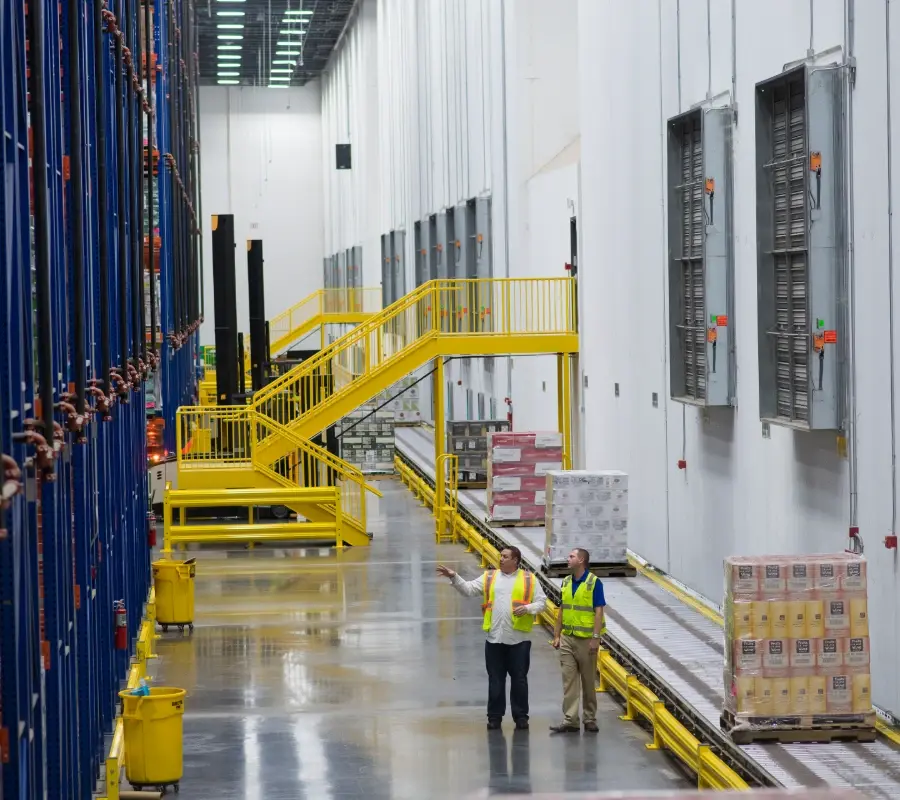
Customer walking through a large grocery distribution warehouse with high-density storage racks.

What it is: Integrated warehouse automation solutions for grocery and food retail distribution, including multi-temperature AS/RS, goods-to-person fulfillment, micro-fulfillment centers, and automated store replenishment.

Why it matters: Grocery retailers compete on freshness, availability and convenience — while managing labor challenges in cold and frozen environments. Maintaining accuracy and speed under these conditions makes traditional manual operations increasingly difficult to sustain.

How we help: Toyota Automated Logistics analyzes your network, order profiles, and temperature requirements to design automation systems that increase throughput, reduce labor exposure, and protect product quality.

Capabilities

Multi-Temperature AS/RS

Automated storage and retrieval systems are designed for ambient, refrigerated, and frozen environments. High-density storage reduces the cubic space requiring temperature control, lowering energy and facility costs while maintaining precise inventory management.

Goods-to-Person E-Grocery Fulfillment

Automation delivers products directly to ergonomic pick stations, accelerating online order assembly while minimizing worker exposure to cold environments. Systems support accurate, high-throughput fulfillment across temperature zones.

Micro-Fulfillment Center (MFC) Technology

Compact automation systems are deployed in store backrooms or nearby locations. MFCs enable rapid e-grocery fulfillment close to customers, supporting same-day and fast delivery without expanding traditional distribution footprints.

Automated Store Replenishment

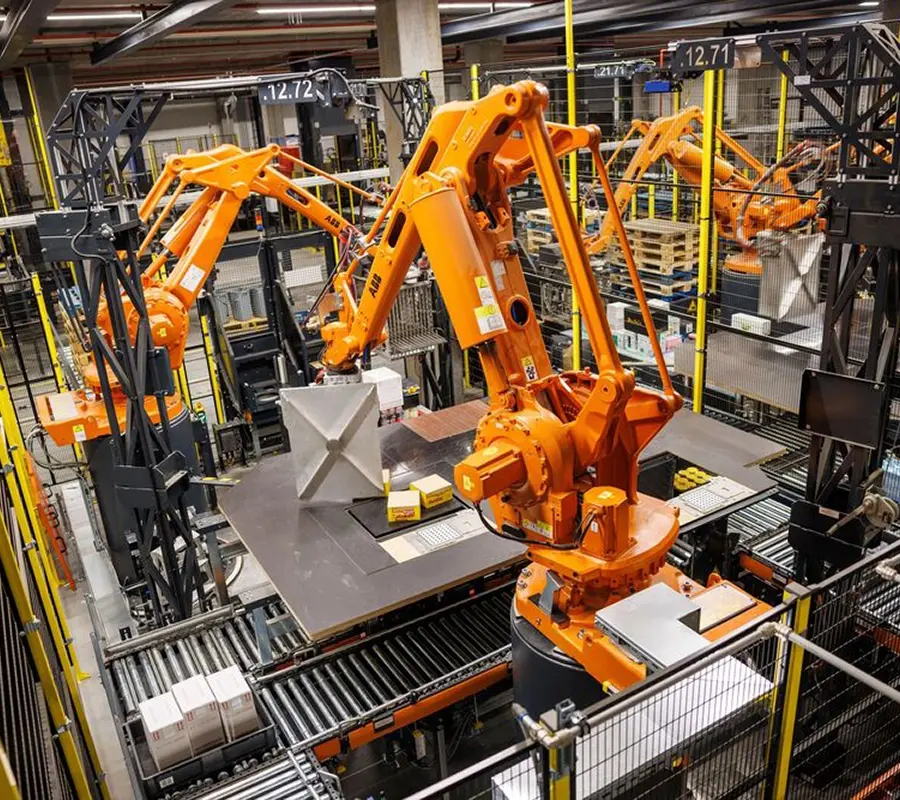
Case-level automation efficiently builds store-ready and aisle-ready pallets. Automated sortation and mixed-case palletizing reduce labor in distribution centers and improve store-level efficiency.

FEFO-Compliant Inventory Management

Automation enforces First Expired, First Out rotation automatically. Date code tracking, lot traceability, and expiration management reduce waste and support food safety compliance.

Conveyor and Sortation Systems

High-throughput material handling systems optimized for grocery distribution. Sanitary designs and gentle handling protect produce and damage-sensitive products while maintaining fast, reliable flow.

Key Benefits

Multi-Temperature Efficiency

Operate ambient, refrigerated, and frozen zones within integrated automation systems. Reduce operational complexity and labor requirements across temperature environments.

Accelerated E-Grocery Fulfillment

Goods-to-person automation increases pick rates and supports same-day and rapid delivery expectations that manual picking struggles to meet at scale.

Improved Product Freshness

FEFO automation and optimized inventory flow ensure products ship at peak freshness while reducing spoilage and waste.

Reduced Cold Chain Labor Exposure

Automation minimizes the time workers spend in refrigerated and frozen areas, improving safety, comfort, and retention.

Higher Storage Density

AS/RS technology improves cubic utilization in high-cost refrigerated facilities, reducing building size and energy consumption.

Consistent Store Service Levels

Reliable automation maintains throughput regardless of labor availability, ensuring stores receive accurate, on-time replenishment.

Comparison: Manual vs. Automated Grocery Distribution

Factor Manual Operations Automated Distribution
Cold Storage Labor Extended exposure Minimal presence
FEFO Compliance Manual, error-prone Automated, 100%
Storage Density Standard utilization 40-60% improvement
Product Waste 2-4% typical Under 1% achievable
MFC Throughput N/A 1000+ items/hour
Reliability Dependent on staffing, temperature conditions and shift variation Stable, predictable performance across all temperature zones

Applications

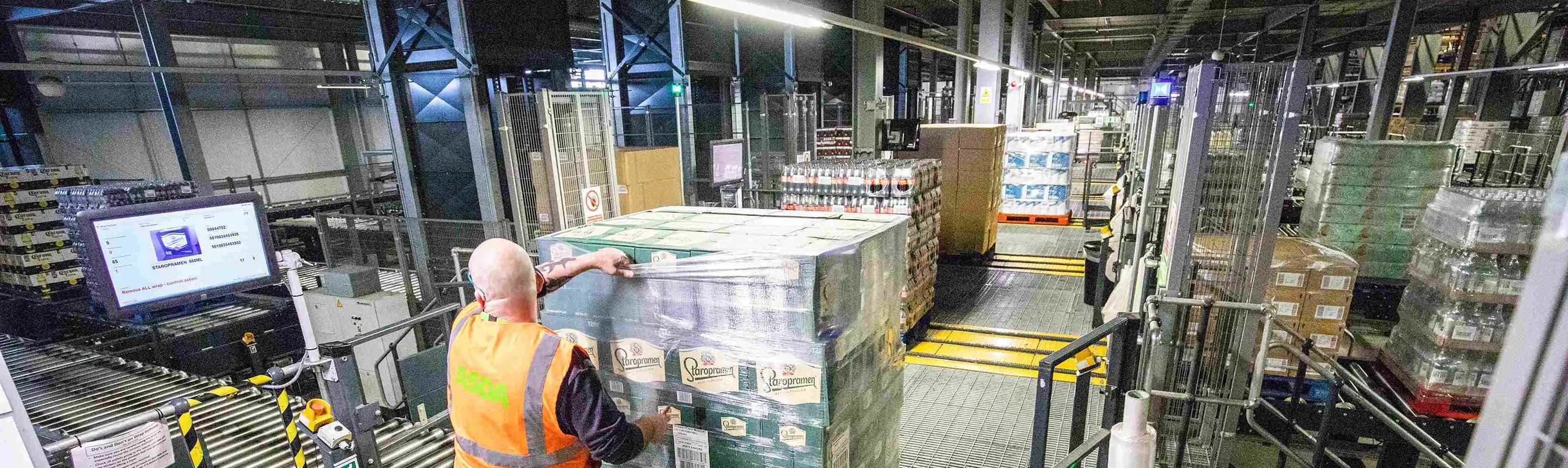
Automated warehouse floor for food and beverage distribution featuring automated pallet handling, forklifts and palletized inventory.

Toyota Automated Logistics evaluates grocery distribution networks to identify automation solutions that deliver the lowest total cost of operation while supporting growth and changing fulfillment models.

Common grocery and food retail applications include:

  • Regional grocery distribution centers
  • E-grocery fulfillment centers
  • Micro-fulfillment centers (store-based or standalone)
  • Fresh distribution facility
  • Frozen food distribution
  • Grocery dark store

Frequently Asked Questions

How does automation maintain food safety across temperature zones?

Toyota Automated Logistics systems enforce strict temperature protocols throughout the fulfillment process. Products move quickly between zones with minimal exposure to ambient conditions. FEFO automation ensures proper rotation. Complete traceability supports food safety compliance and recall capability if needed, ensuring reliable compliance across temperature zones.

What is a micro-fulfillment center and how does it work?

A micro-fulfillment center (MFC) is a compact automated system, typically located in a store's backroom or nearby facility, that enables rapid e-grocery fulfillment. MFCs use goods-to-person automation to store inventory and fulfill online orders quickly. Their proximity to customers enables same-day and fast delivery.

Can automation handle the product variety in grocery distribution?

Yes. TAL designs systems for grocery's diverse product assortment, from fragile produce to heavy beverages. Multiple handling approaches address different product characteristics, ensuring dependable results across packaging types. Our engineering team assesses your complete SKU profile during system design.

How does MFC technology integrate with existing store operations?

MFCs are designed for integration with store systems and operations. Online orders flow from your e-commerce platform to the MFC for fulfillment. Inventory can be shared with store shelves or dedicated to online fulfillment. TAL works with your IT team to ensure smooth integration.

What support does TAL provide for grocery automation systems?

Toyota Automated Logistics provides comprehensive lifecycle support. Including:

  • Preventive maintenance
  • Remote monitoring
  • 24/7 technical support
  • Performance optimization

Our service agreements are structured for the uptime requirements of grocery distribution.

How does automation reduce product waste in grocery?

Automation enforces FEFO rotation automatically, ensuring older inventory ships first. Optimal storage conditions and gentle handling protect product quality. Better inventory visibility reduces overstocking and obsolescence. Many grocers see waste reductions of 50% or more.

Navigate Your Automation Decisions with Confidence

Partner with our experts to evaluate your operations and identify reliable automation opportunities that scale with your business.