
Toyota Automated Logistics combines Bastian Solutions, Vanderlande’s warehousing business, and viastore under one unified brand.

We deliver innovative warehouse automation solutions that enable our customers to achieve a sustainable competitive advantage.

Search toggle

Conveyor Systems for Automated Material Transport

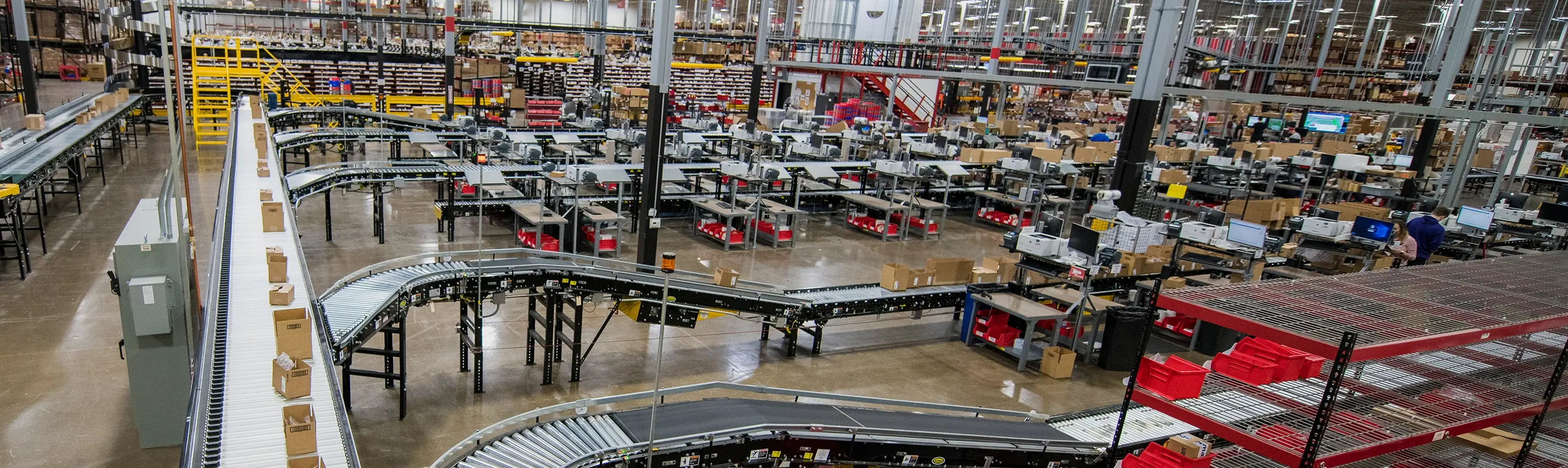
Automated conveyor systems and storage racks in a modern industrial distribution center.

Conveyor systems form the backbone of warehouse automation, keeping goods moving continuously and reducing the need for manual handling. When designed well, they create consistent, predictable movement that cuts travel time and keeps each process operating at the right pace.

Toyota Automated Logistics designs conveyor solutions that maximize throughput, make better use of your space, and connect seamlessly with your automation. We analyze how work moves through your facility and design paths that support required volumes, fit your footprint, and integrate with upstream and downstream systems — delivering a faster, safer, more efficient operation built to scale.
Overview

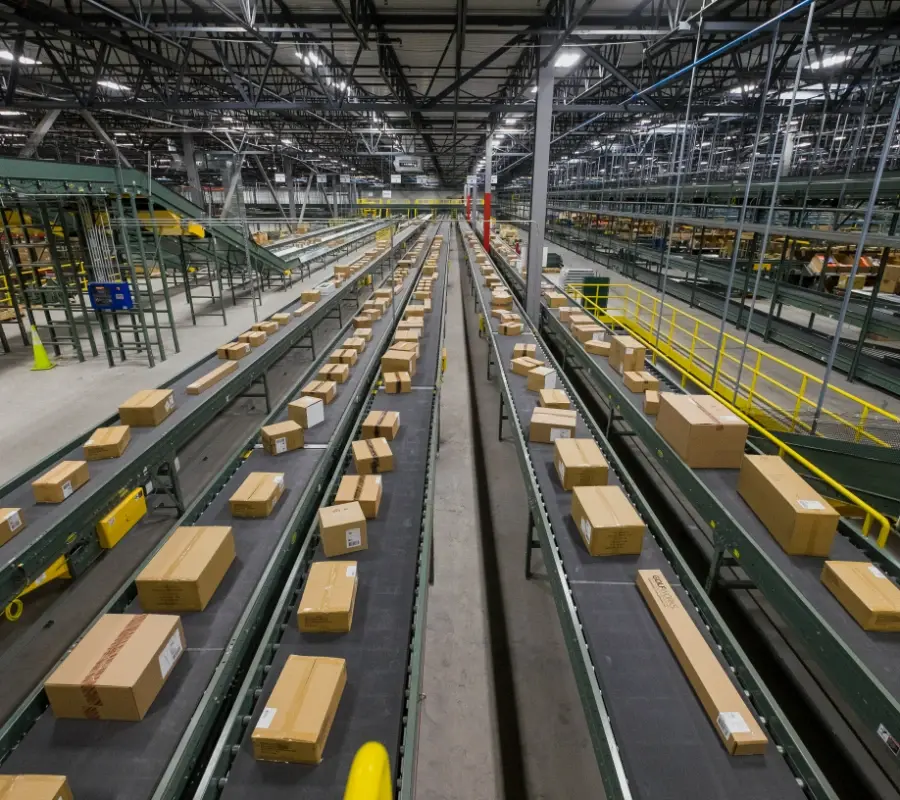
Automated conveyor systems transport packages in an omnichannel distribution center.

What it is: Conveyor systems are powered pathways that move items through a facility in a controlled and continuous manner, enabling automated transport across different elevations and distances.

Why it matters: Manual material transport drives higher labor demands and uneven performance, while conveyor automation provides reliable, consistent movement with higher throughput.

How we help: Toyota Automated Logistics designs and integrates conveyor systems as part of a unified operations strategy strategy that reduces manual handling while delivering reliable, scalable warehouse performance.

Capabilities

Efficient Product Transport

Transport conveyors move products quickly and predictably across your facility across floors, between levels, or overhead. They reduce manual handling, cut travel time, and support everything from receiving to case and pallet movement.

Accumulation and Flow Control

Accumulation conveyors provide controlled buffering that protects products while maintaining steady flow through the system. We select accumulation strategies based on product characteristics and required throughput to ensure reliable operation without unnecessary stress on items or equipment.

Sortation Integration

Sortation systems work with conveyors to automatically direct products to the correct destination, improving accuracy and reducing manual touches. We design sortation systems sized to your throughput and process requirements for consistent, reliable performance.

Pallet Handling

Pallet conveyors move heavy loads safely and efficiently. Depending on the application, we apply gravity rollers, chain-driven rollers, drag chains, or slat conveyors supported by transfers and turntables to keep pallet handling smooth and controlled.

Overhead Conveyor Systems

Overhead conveyors free up floor space while transporting products on elevated tracks. In addition to traditional overhead transport, accumulation, and monorail or track conveyor, our power-and-free designs or pouch sorters provide precise routing, buffering, and sequencing, helping you maintain high productivity without interrupting downstream processes.

Incline and Decline Handling

Incline and decline conveyors move products between elevation levels while maintaining consistent flow and product control within the facility. We engineer solutions that match product characteristics and space constraints, enabling efficient vertical movement without sacrificing throughput or floor space.

Merge and Divert Functions

Merge and divert conveyors coordinate how products come together or separate, preserving speed and accuracy. We design these transitions to sync timing, routing logic, and scanning so items reach the right destination reliably and accurately without interruption.

WMS/WES/WCS Integration

Conveyor controls connect with your warehouse management and warehouse execution software for real-time tracking, dynamic routing, and coordinated scheduling. Dashboard interfaces provide live throughput visibility, while historical data supports ongoing optimization and predictive maintenance.

Key Benefits

Continuous Throughput

Conveyors move materials 24/7 at consistent speeds without breaks, achieving throughput rates impossible with manual transport methods.

Reduced Labor Costs

Automated conveyance eliminates walking and pushing carts, allowing workers to focus on value-added tasks such as picking, packing, and quality inspection.

Improved Ergonomics

Conveyors deliver products to workers at optimal heights, reducing ergonomic issues that cause musculoskeletal injuries.

Predictable Cycle Times

Fixed conveyor speeds create consistent transport times, enabling accurate scheduling, labor planning, and customer delivery promises.

Space Efficiency

Overhead conveyors and vertical lifts use cubic space effectively. Organized conveyor paths eliminate the wide aisles required for cart and forklift traffic.

Product Protection

Controlled conveyor movement prevents the drops, collisions, and rough handling that damage products during manual transport.

Expandable Capacity

Modular conveyor designs allow expansion as business volume grows without complete system replacement.

Real-Time Visibility

Operations dashboards can display conveyor status down to the accumulation zone level, while integrated sensors can track every item throughout the conveyor network — providing accurate inventory location data and throughput metrics.

Applications

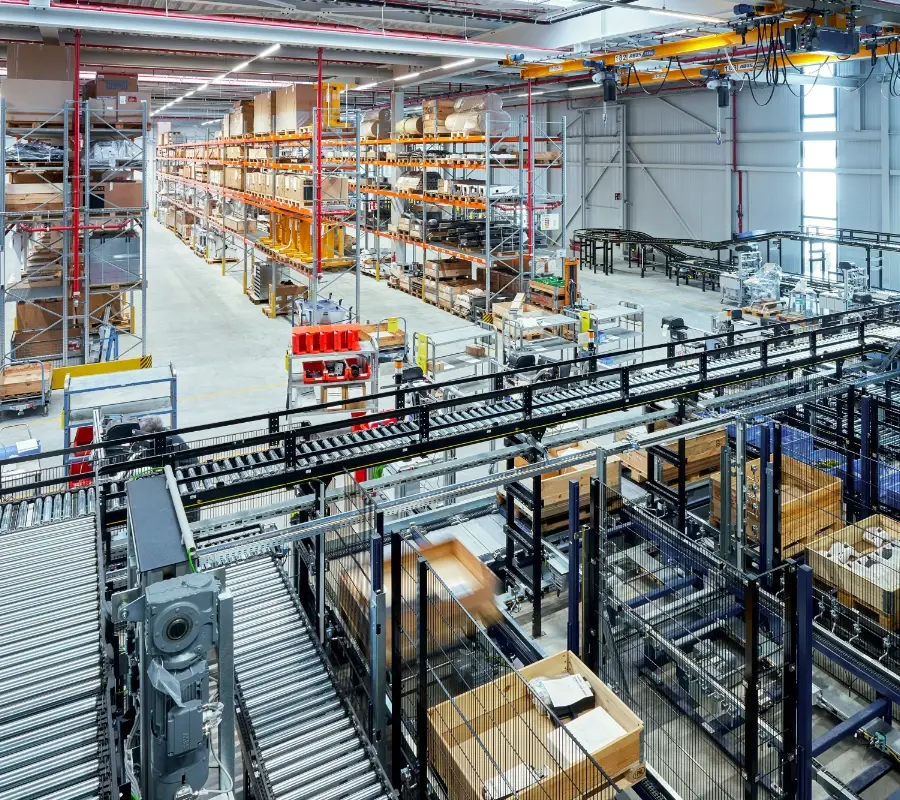
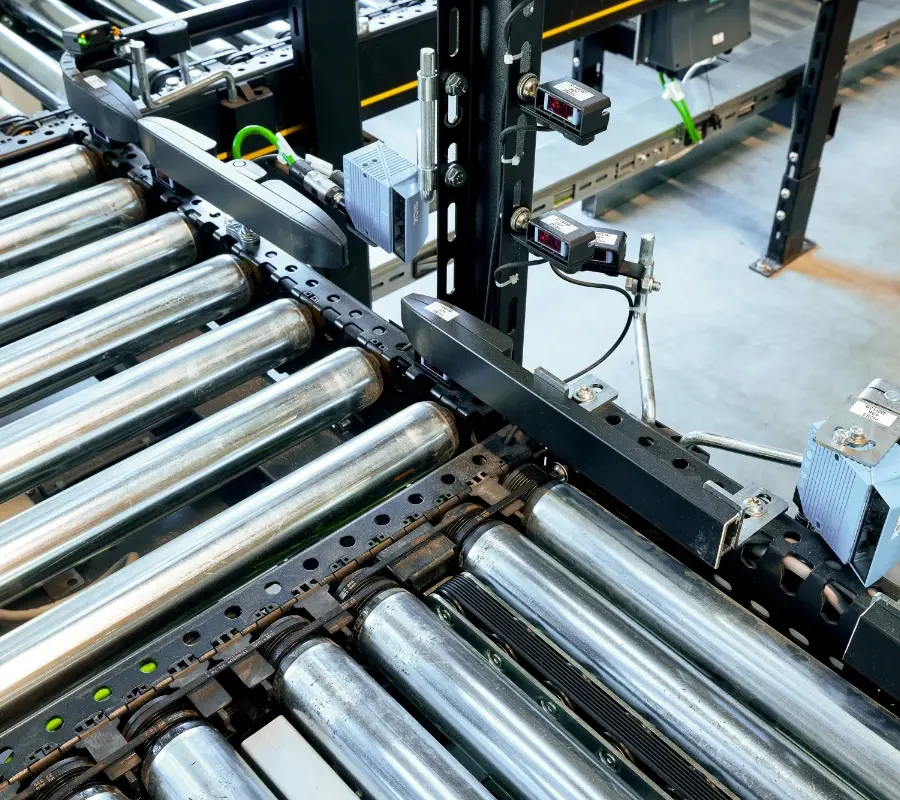
Industrial roller conveyor system with integrated sensors for automated material handling.

Conveyor systems support a wide range of operational environments where consistent material movement and predictable flow are essential. Across industries, conveyors connect processes at scale in both fulfillment and production settings.

Conveyor systems are deployed in a wide range of industries:

  • E-Commerce Fulfillment
  • Manufacturing Production Lines
  • Distribution Centers
  • Food and Beverage Processing
  • Pharmaceutical and Healthcare
  • Retail Replenishment

Frequently Asked Questions

How do I determine the right conveyor system for my needs?

We work with you to design a layout that meets your product mix and operational goals, then select the right conveyor types and configurations for optimal performance. Every solution is tailored to your space, products, and throughput requirements.

Can conveyors handle different product sizes on the same line?

Yes. Conveyors can manage a wide range of product sizes when designed with the right guides and adjustability. We size each system based on your minimum and maximum product dimensions, and can incorporate adjustable components when the variation is significant, ensuring stable, reliable handling across the full range.


How do conveyors integrate with warehouse management and execution software?

Conveyors integrate with WMS/WES through programmable logic controllers (PLCs) that communicate using standard industrial protocols. Conveyor controls provide real-time location data to warehouse software. WMS and WES send directional routing instructions to conveyor controls based on order priority, destination assignment, and wave planning logic. 

What floor space does a case and tote conveyor system require?

The conveyor footprint depends on the path length, width, and curve radius required to meet your throughput goals. Standard conveyor widths range from 12 inches for small items to 48 inches for large cartons or totes, with additional space needed for supports and access. Overhead conveyors minimize floor-space impact by using vertical space, while spiral conveyors provide elevation change within compact footprints. 

What kind of support does Toyota Automated Logistics provide?

We support you from installation through the entire lifecycle of your system. Services include preventive maintenance programs, on-site assistance, and 24/7 technical support to keep your conveyors running reliably.

Navigate Your Automation Decisions with Confidence

Whether you're evaluating a single technology or planning a complete automation strategy, we help you choose reliable solutions that scale with your business.