
Toyota Automated Logistics combines Bastian Solutions, Vanderlande’s warehousing business, and viastore under one unified brand.

We deliver innovative warehouse automation solutions that enable our customers to achieve a sustainable competitive advantage.

Search toggle

Warehouse Automation Solutions for Parts & Components Distribution

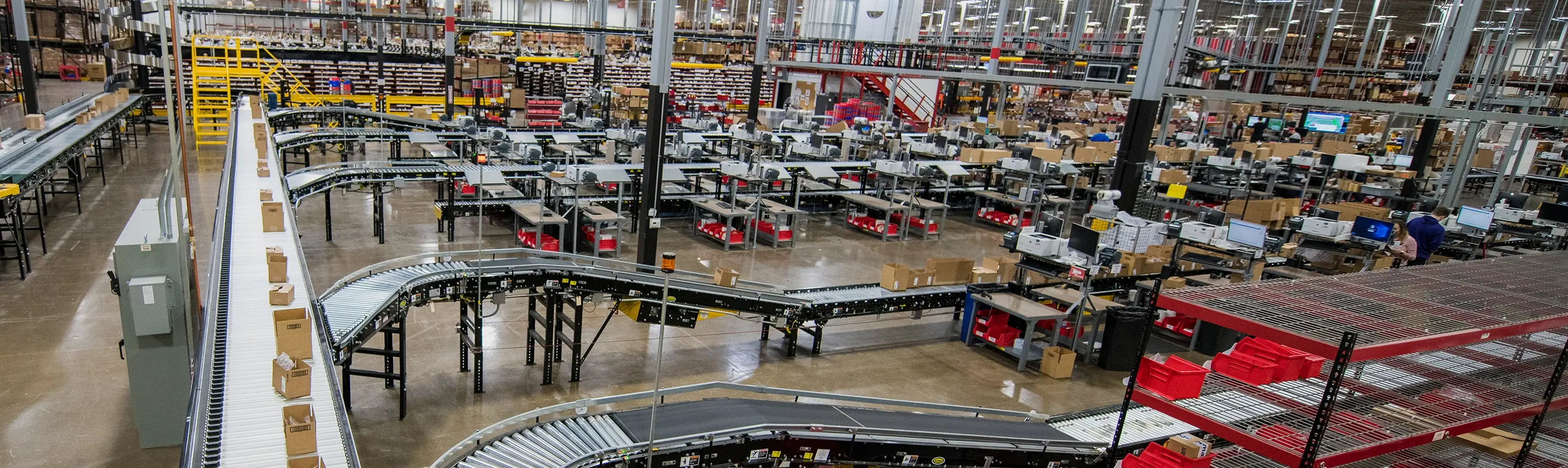
A warehouse worker uses automated equipment to process parts and components orders for distribution.

Parts and components distribution demands extreme accuracy across huge SKU counts and tight service-level commitments. From automotive aftermarket and industrial MRO to electronics and aerospace, distributors must locate, pick, and ship the exact right part — often under tight delivery timelines.

Toyota Automated Logistics designs, integrates, and supports warehouse automation solutions built specifically for parts and components operations. Our systems help distributors increase picking accuracy, accelerate order fulfillment, and scale capacity without proportional increases in labor or facility footprint.
Overview

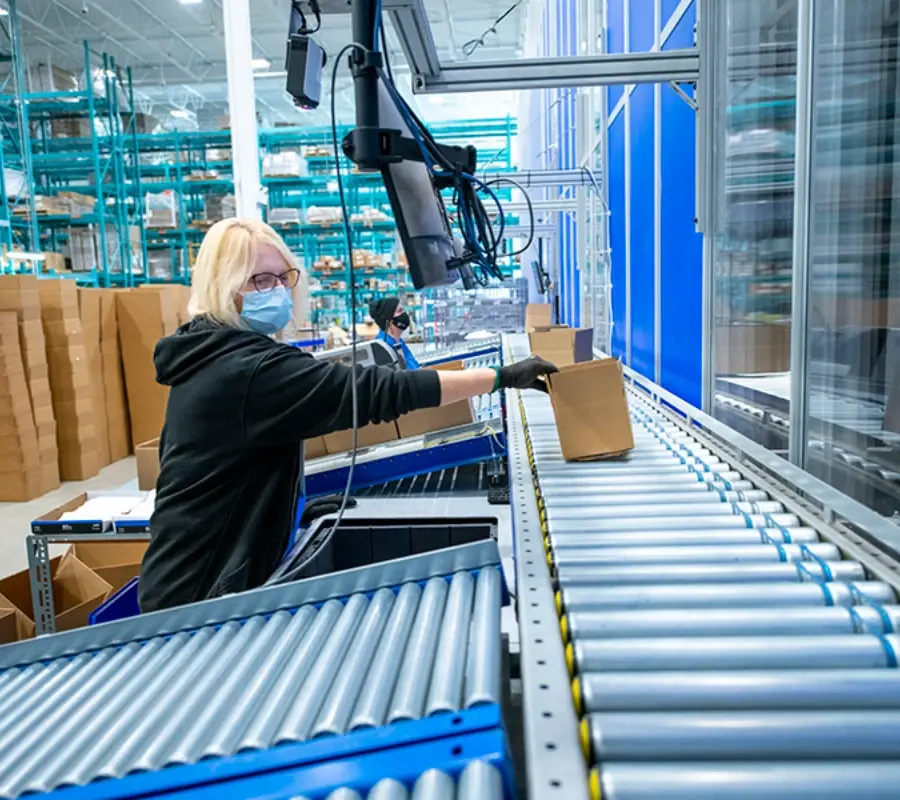
Automated sortation system transporting blue storage bins in a parts and components warehouse.

What it is: Integrated warehouse automation solutions for parts and components distribution, including high-density automated storage, goods-to-person picking systems, automated sortation, and inventory management with full traceability.

Why it matters: Parts distributors compete on availability, speed, and accuracy. Even small picking errors can delay customer repairs, leading to costly returns, expedited reshipments, and damaged customer relationships.

How we help: Toyota Automated Logistics analyzes your SKU profile, order characteristics, and service-level requirements to design automation systems that deliver fast, accurate fulfillment at scale while ensuring confident part identification across all workflows.

Capabilities

Goods-to-Person Picking Systems

Automation delivers inventory directly to pick stations, eliminating the travel time that can consume the majority of a picker’s shift in extensive parts facilities. Operators pick at ergonomic stations with system-directed workflows.

Mini-Load AS/RS for Small Parts

High-density automated storage optimized for totes, bins, and cartons containing small parts. Rapid retrieval supports high-velocity picking while dramatically increasing storage density.

Vertical Storage Solutions

Vertical lift modules (VLMs) provide dense storage for medium-velocity parts. Items are delivered to operators while occupying minimal floor space.

Conveyor and Sortation Systems

Integrated conveyor and sortation networks route picked items to packing stations, shipping lanes, or consolidation areas. Systems handle the varied packaging types common in parts distribution.

Inventory Management Integration

Automation integrates with parts-focused WMS platforms, supporting supersessions, substitutions, cross-references, and lot-level traceability.

Key Benefits

Higher Storage Density

Automated storage systems increase cubic utilization by 40–60%, allowing massive SKU counts without facility expansion.

Faster Order Fulfillment

Goods-to-person automation and rapid retrieval dramatically reduce order cycle times, enabling same-day and next-day shipping.

Superior Picking Accuracy

Automated verification and system-directed workflows achieve 99.9%+ accuracy, reducing returns, reshipping costs, and customer dissatisfaction.

Scalable SKU Growth

Systems are designed to accommodate ongoing SKU proliferation without proportional increases in space, labor, or complexity.

Reduced Labor Dependency

Automation replaces the travel and search time inherent in manual picking, stabilizing throughput despite labor challenges.

Support for Multiple Service Levels

Automation prioritizes urgent orders while efficiently processing standard fulfillment, all within the same system.

Comparison: Manual vs. Automated Parts Distribution

Factor Manual Operations Automated Distribution
Order Accuracy 97-99% 99.9%+
Storage Density 40-50% utilization 80-90% utilization
SKU Capacity Limited by space Optimized density
Urgent Order Response Constrained Prioritized retrieval
Training Time Weeks (part familiarity) Days
Reliability Variable accuracy and fulfillment speed Predictable retrieval and consistent performance across SKUs

Applications

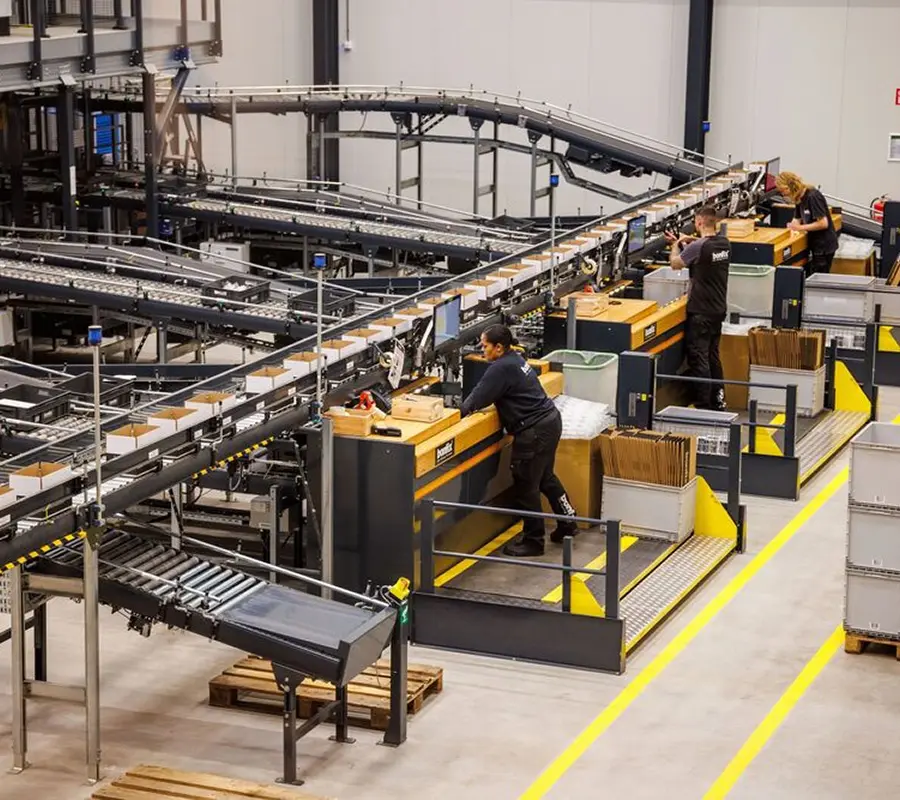
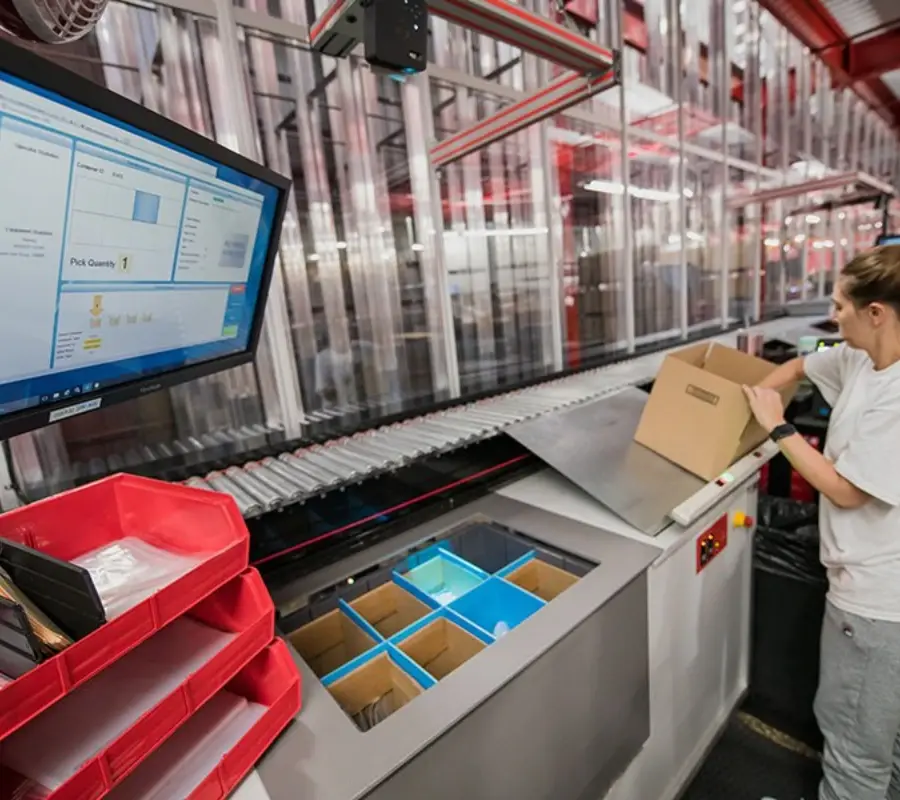
Warehouse worker using an automated picking system for efficient parts and components distribution.

Parts distribution operations depend on automation that handles SKU complexity, supports urgent service levels, and maintains accuracy across all product types.

Toyota Automated Logistics evaluates parts distribution operations to identify automation solutions that deliver the lowest total cost of fulfillment while supporting service-level commitments.

Common applications include:

  • Industrial MRO and maintenance parts fulfillment
  • Electronics components distribution
  • Aerospace and defense parts operations
  • Automotive aftermarket parts distribution
  • Heavy equipment and agricultural parts distribution
  • Wholesale and dealer-based parts networks

Frequently Asked Questions

How does automation handle the massive SKU counts in parts distribution?

Toyota Automated Logistics designs systems specifically for high-SKU operations. Automated storage systems maximize density while maintaining rapid access to any part. Slotting optimization ensures fast-moving parts are positioned for quick retrieval, while slow movers are placed in efficient, high-density locations.

What accuracy rates can automation achieve?

Properly designed automation systems achieve 99.9%+ accuracy through pick-to-light verification, barcode scanning, weight checking, and systematic inventory management. Multiple verification points ensure the right part ships every time.

Can automation support same-day shipping for urgent orders?

Yes. Toyota Automated Logistics systems support priority-order processing, accelerating retrieval and fulfillment for urgent requests. Orders can be flagged for expedited handling, and the system adjusts task sequencing to meet critical deadlines.

How does automation handle parts of vastly different sizes?

Toyota Automated Logistics designs storage and handling approaches appropriate for your complete product range. Small parts may use goods-to-person systems while larger items use AS/RS. Integrated systems coordinate fulfillment across storage types.

How do systems integrate with our parts-specific WMS?

Toyota Automated Logistics automation integrates with parts WMS platforms, including functionality for substitute parts, supersessions, and cross-references. Our implementation team works with your IT staff to ensure proper data flow and support for business rules.

What ongoing support does TAL provide?

TAL provides comprehensive lifecycle support, including preventive maintenance, remote monitoring, 24/7 technical support, and performance optimization. Service agreements are structured to maintain system uptime and continuously improve productivity.

Navigate Your Automation Decisions with Confidence

Partner with our experts to evaluate your operations and identify reliable automation opportunities that scale with your business.