
Toyota Automated Logistics combines Bastian Solutions, Vanderlande’s warehousing business, and viastore under one unified brand.

We deliver innovative warehouse automation solutions that enable our customers to achieve a sustainable competitive advantage.

Search toggle

Automated Picking & Order Fulfillment Solutions

automated order picking systems increase fulfillment speed and accuracy

Picking is often the most labor-intensive activity in warehouse and distribution operations. Manual picking requires workers to travel long distances, locate products, verify quantities, and consolidate orders while maintaining accuracy under time pressure.

Toyota Automated Logistics designs and integrates picking automation that reduces travel time, increases pick accuracy, and scales with demand. Our systems coordinate goods-to-person technologies, robotics, and pick-to-light solutions to stabilize fulfillment operations and give you real-time control over order flow.
Overview

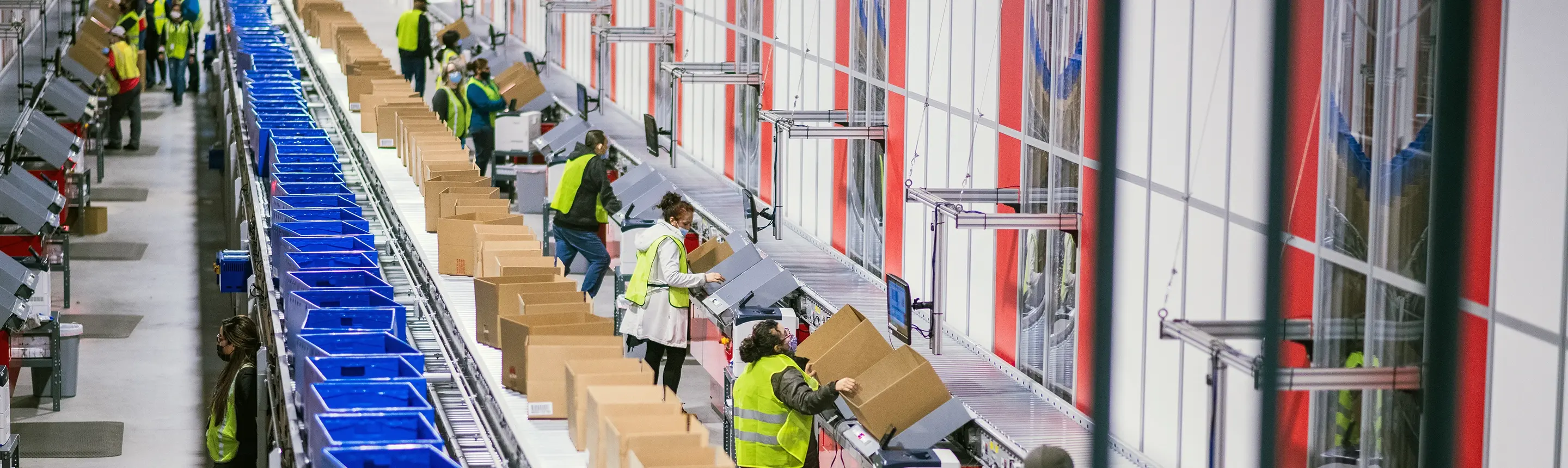
A warehouse worker uses a pick-to-light digital display to manage order fulfillment.

What it is: Picking and order fulfillment is the facility process of retrieving items from storage locations and assembling them into customer orders for packing and shipment.

Why it matters: Manual picking is slow, physically demanding, and error-prone — especially during peak periods. These challenges create bottlenecks that delay shipments, increase labor costs, and damage customer satisfaction.

How we help: Toyota Automated Logistics analyzes your order profiles, SKU characteristics, and facility layout to design intelligent picking systems that improve speed, accuracy, and throughput without overbuilding — ensuring your solution fits your true operational needs.

Picking Automation Capabilities

Goods-to-Person Picking

Goods-to-person (GTP) systems bring inventory directly to pick stations, eliminating worker travel. AMRs, shuttle systems, or automated storage and retrieval systems (AS/RS) deliver totes, cases, or pallets to ergonomic workstations where operators pick required quantities. This approach dramatically increases picks per hour while reducing fatigue and injury risk.

Pick-to-Light and Put-to-Light

Pick-to-light systems use illuminated displays at storage locations to guide operators to the correct bin and quantity. Put-to-light systems direct workers to place picked items into the correct order container. Both technologies reduce errors, accelerate picking speed, and require minimal training.

Voice-Directed Picking

Voice picking systems provide audio instructions through headsets, keeping workers’ hands and eyes free for faster, safer picking. The system confirms picks through voice responses, maintaining accuracy while enabling workers to move through pick paths efficiently.

AMR-Assisted Picking

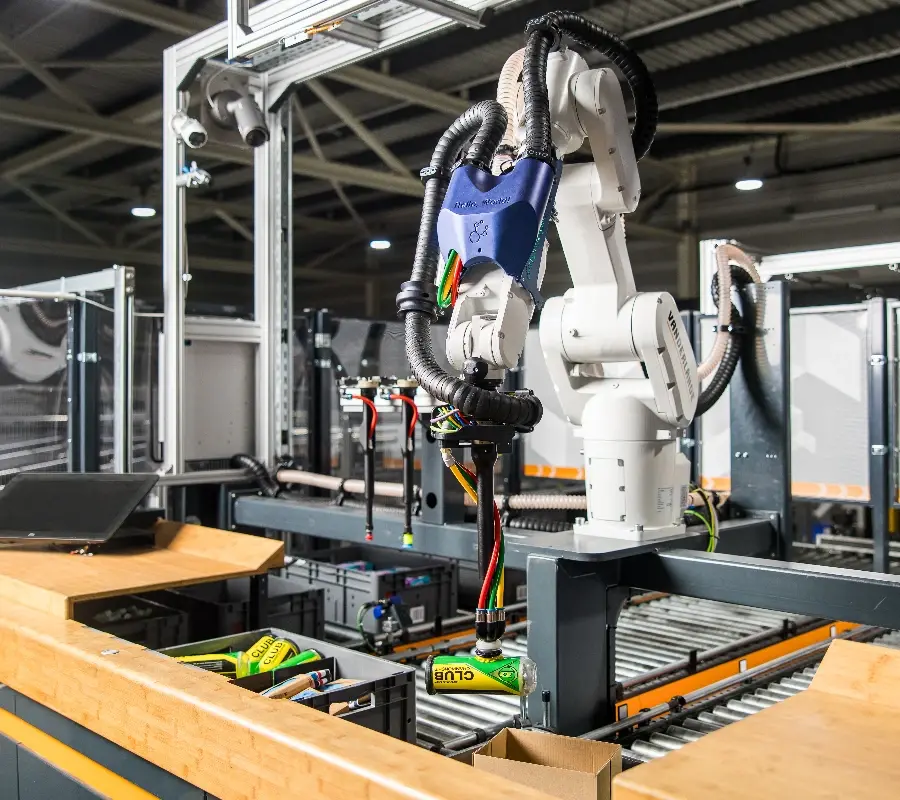
Autonomous vehicles travel to pick locations and transport items to packing stations, reducing worker walking by up to 70%. Collaborative robots work alongside human pickers, handling transport while workers focus on item retrieval and verification.

Order Verification and Quality Control

Automated scanning, vision systems, and weight verification confirm that each order contains the correct items and quantities before release to packing. Inline quality checks catch errors at the point of picking rather than at shipment or after customer receipt.

Dynamic Order Consolidation

Multi-line orders are consolidated from multiple pick zones into complete orders using automated sortation and sequencing systems. The WES coordinates timing across zones to ensure all order components arrive together at packing stations.

Key Benefits of Picking Automation

Reduced Labor Costs

Goods-to-person and AMR-assisted systems reduce headcount requirements while increasing output per worker.

Higher Pick Accuracy

Scan verification, pick-to-light guidance, and automated quality checks reduce pick errors to near-zero levels.

Faster Order Fulfillment

Eliminating travel time and improving pick sequences accelerates order completion and same-day shipping capability.

Lower Injury Risk

Ergonomic workstations and reduced walking decrease repetitive strain injuries and worker fatigue.

Expandable Throughput

Automated systems handle demand surges without proportional labor increases, supporting peak season volumes.

Real-Time Visibility

WES integration provides live order status, inventory accuracy, and performance metrics for operational control.

Comparison: Manual vs. Automated Picking

Feature Manual Picking Automated Picking
Throughput Low throughput; limited by worker pace High throughput with significantly faster cycle times
Labor Requirements High (scales linearly with volume) Reduced 40-70%
Accuracy Good accuracy but prone to human error Extremely high accuracy with near-error-free performance
Consistency Variable by worker and shift Predictable and repeatable
Scalability Limited by labor availability Handles volume surges
Visibility Delayed or manual tracking Real-time order status
Reliability Depends on worker accuracy and energy Stable, predictable performance across shifts

Applications

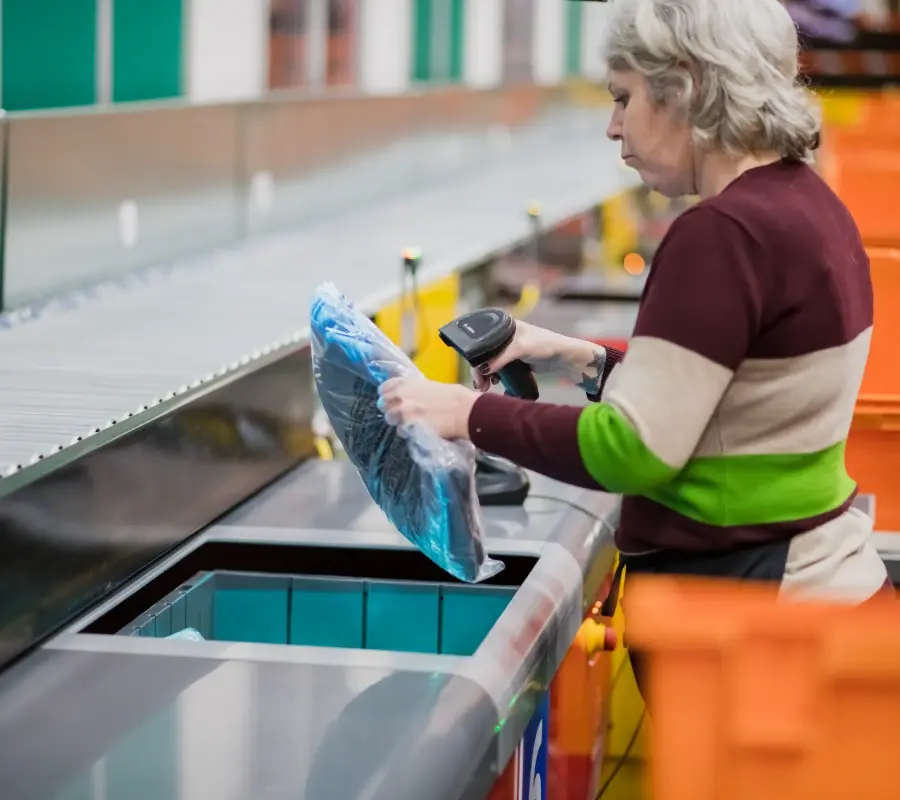
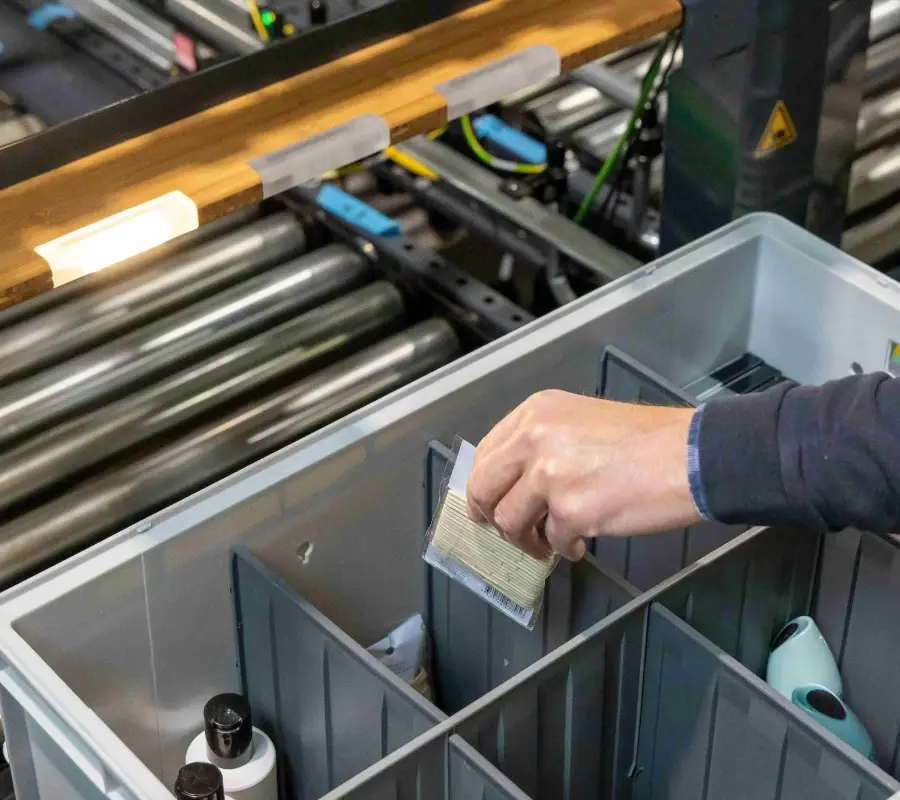
Warehouse workers processing apparel orders next to conveyor belt system in a fulfillment center.

Toyota Automated Logistics designs picking solutions tailored to your operation, considering SKU variability, order profiles, facility constraints, and integration with packing and shipping systems.

Picking automation is commonly deployed in:

  • Warehousing & Distribution Centers
  • E-Commerce Fulfillment Centers
  • Retail Distribution Networks
  • Manufacturing Parts Distribution
  • Food & Beverage Operations
  • Pharmaceutical & Healthcare Distribution

Frequently Asked Questions

What does automated picking include?

Automated picking includes goods-to-person retrieval, pick-to-light and voice-directed picking, AMR-assisted transport, order verification, and multi-zone consolidation. Toyota Automated Logistics integrates these technologies based on your order profiles, SKU characteristics, and throughput requirements.

Can automated picking handle mixed SKUs and variable order sizes?

Yes. Modern picking systems handle everything from single-piece e-commerce orders to full-case wholesale shipments. Goods-to-person systems, zone picking strategies, and dynamic slotting adapt to SKU variability and changing order profiles.

How does automated picking ensure order accuracy?

Accuracy is maintained through barcode scanning at pick, weight verification, vision inspection, and pick-to-light confirmation. Multi-point verification catches errors before orders leave the pick area, achieving accuracy rates above 99.9%.

Do I need to fully automate my picking operation?

No. Toyota Automated Logistics designs solutions that range from targeted enhancements to comprehensive goods-to-person systems. Many facilities benefit from incremental automation that addresses specific bottlenecks first.

Will automated picking integrate with my existing WMS?

Yes. TAL picking systems integrate with all major warehouse management systems through standard interfaces. Our warehouse execution systems (WES) coordinate pick assignments, sequencing, and inventory updates with your existing software infrastructure.

What support does TAL provide after implementation?

TAL provides lifecycle support including system improvement, preventive maintenance, parts supply, and technical service. We monitor system performance, recommend improvements, and ensure your picking automation continues to meet evolving operational demands.

Strengthen Every Stage of Your Operation

Partner with our experts to evaluate your workflows and identify reliable automation opportunities that scale with your business.