
Toyota Automated Logistics combines Bastian Solutions, Vanderlande’s warehousing business, and viastore under one unified brand.

We deliver innovative warehouse automation solutions that enable our customers to achieve a sustainable competitive advantage.

Search toggle

Automated Palletizing & Depalletizing Systems

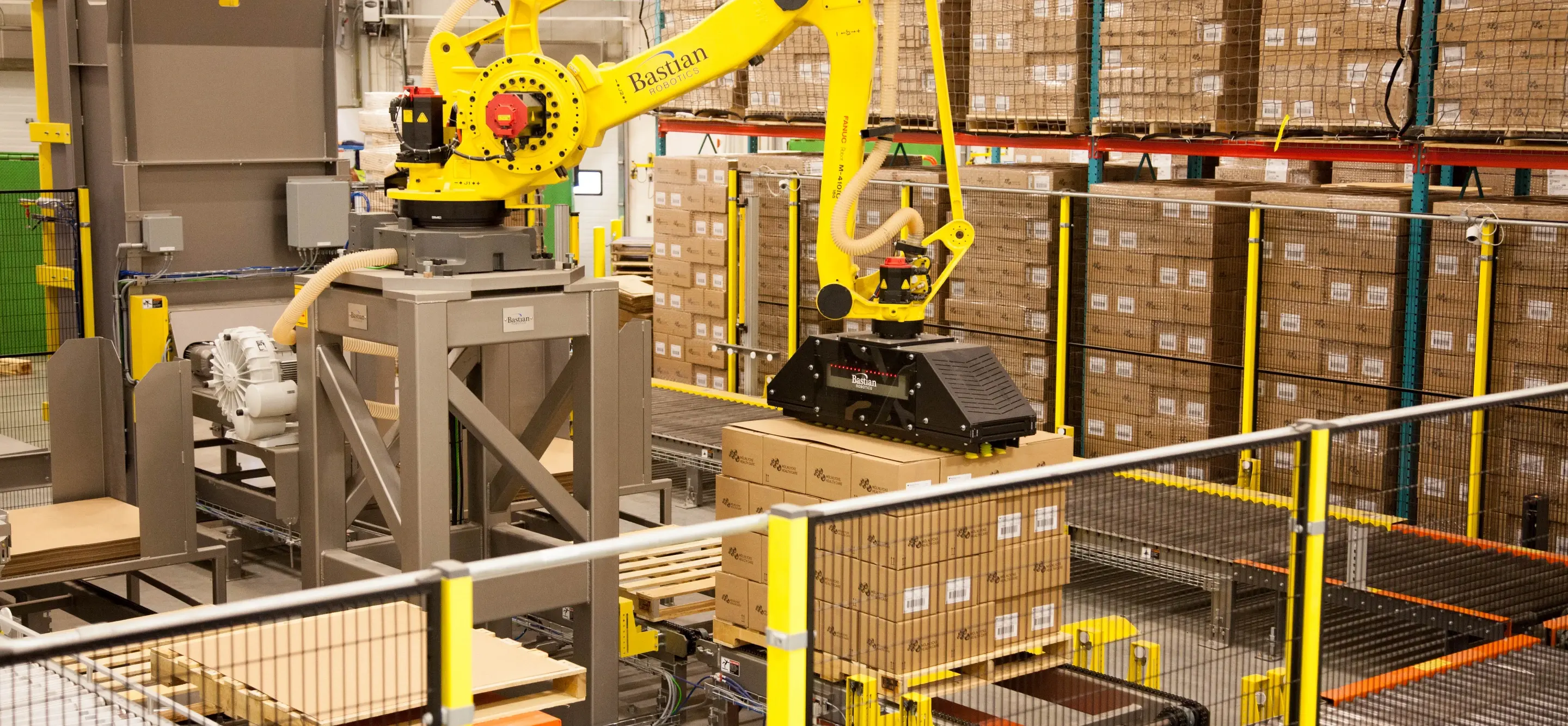
Industrial robotic arm palletizing blue boxes on a conveyor system in an automated warehouse.

Automating palletizing and depalletizing help improve safety, boost throughput, and deliver consistent pallet quality across your operation. By removing one of the most repetitive, injury-prone, and labor‑intensive tasks, your team can stay focused while material continues to flow reliably.

Toyota Automated Logistics designs, integrates, and supports palletizing and depalletizing systems tailored to your product types, performance targets, and space constraints. From flexible robotic palletizers to high-speed conventional systems, our systems scale with demand and integrate seamlessly with the rest of your process to keep production running smoothly.
Overview

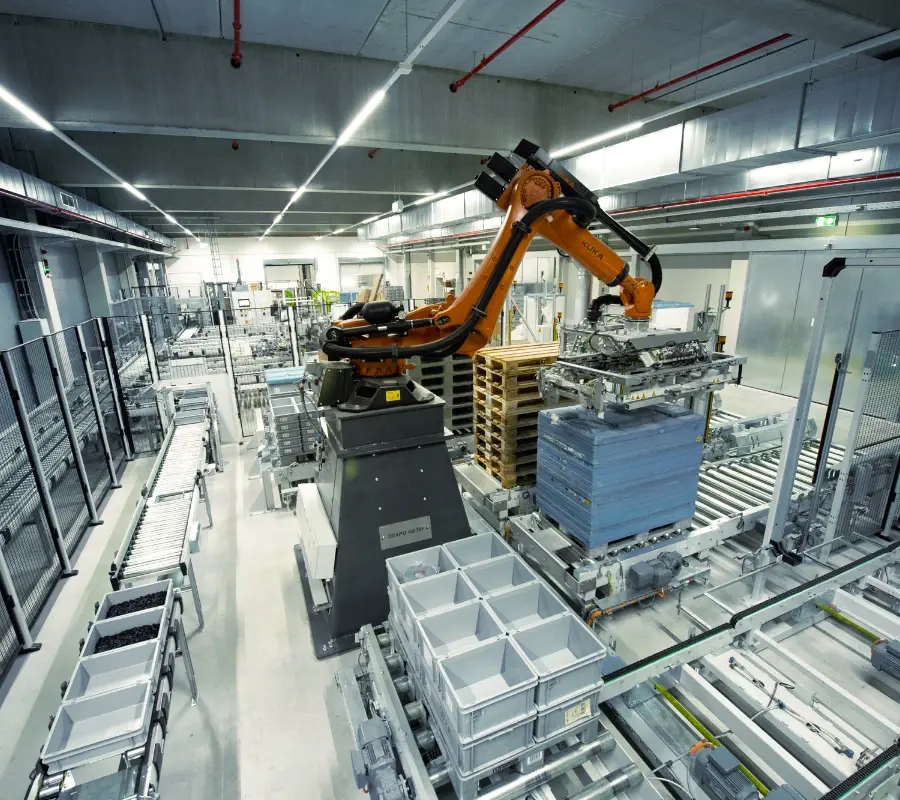
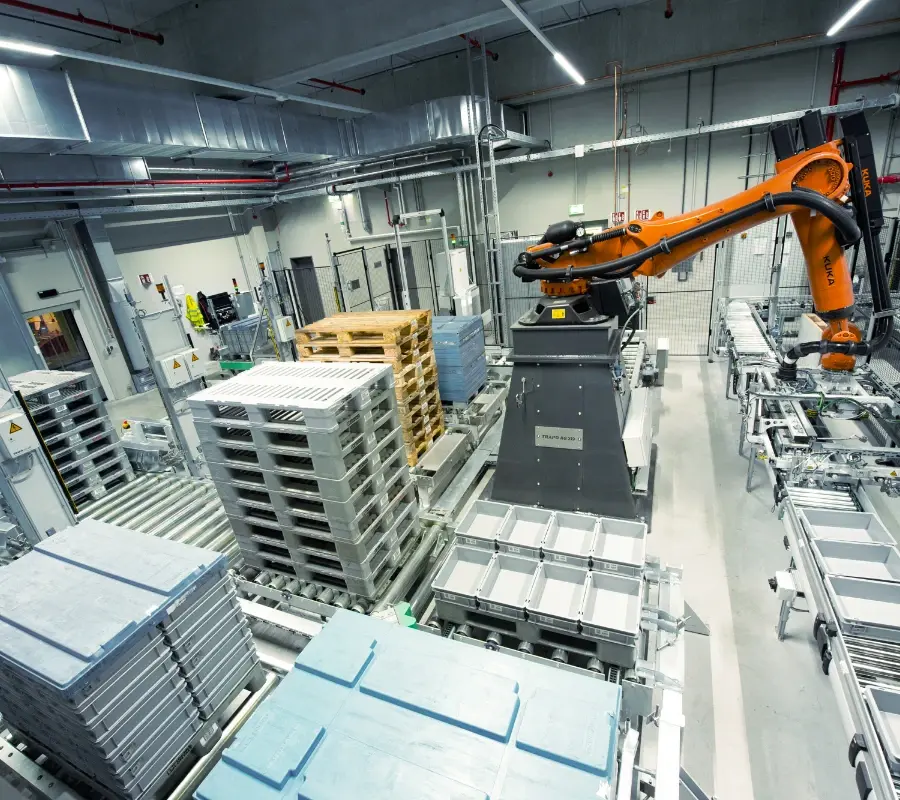
An automated palletizing robot lifting Velux boxes in a high-tech warehouse facility.

What it is: Automated palletizing and depalletizing systems stack or unstack cases, bags, totes or units onto pallets using robotic or mechanical equipment.

Why it matters: Manual palletizing limits throughput and creates significant ergonomic risk. Automation delivers consistent pallet quality, higher speeds, and safer operations across every shift.

How we help: Toyota Automated Logistics designs a palletizing solution around your operation, evaluating your products, volumes, and space to deliver a system that improves safety, raises efficiency, and fits your workflow.

Capabilities

High-Speed Case Handling

Mechanical palletizers deliver extremely high throughput for single-SKU or high-volume production lines. These systems excel where speed and consistency are the primary drivers.
H3: Flexible Pattern Programming
Modern palletizing systems store hundreds of pallet patterns and switch automatically between configurations as directed by warehouse management, execution, and control systems.  From floor-loaded container receiving to outbound pallet build, intelligent pattern optimization software improves pallet stability and cube utilization to ensure consistent output.

Mixed SKU Palletizing

Advanced robotic systems build mixed-SKU pallets within a single stack, supporting store-ready or route-ready delivery models that reduce downstream handling.

End-of-Arm Tooling Options

Vacuum, clamp, fork, bottom-support, pass-through, and layer-handling tools allow robotic palletizers and depalletizers to handle a wide range of product sizes, weights, and packaging types.

Vision-Guided Operations

Integrated vision systems identify product orientation and position on inbound pallets, allowing automated depalletizing even with inconsistent or damaged loads.

Multi-Line Infeed Integration

Single palletizing cells can receive products from multiple production or conveyor lines, consolidating palletizing operations and reducing equipment footprint. Staging conveyors and sequencing logic manage product flow from various sources.

Pallet Pattern Improvement

Software algorithms calculate the best stacking patterns based on case dimensions, weight distribution, and pallet stability requirements. Better patterns increase cube utilization while preventing load shifts during transport.

Integrated Stretch Wrapping

Palletizing systems connect directly to stretch wrap equipment, enabling continuous pallet flow from the building through wrapping. Integrated systems eliminate manual handling between palletizing and wrapping operations, enabling more reliable automation of downstream transport via conveyance or AGVs/AMRs.

Benefits

Eliminated Ergonomic Injuries

Palletizing and depalletizing rank among the highest-risk warehouse tasks for back injuries and repetitive strain. Automation removes workers from these hazardous motions entirely.

Consistent Pallet Quality

Every pallet is built to the same specifications, improving load stability, appearance, and downstream handling.

Increased Throughput

Automated palletizers and depalletizers maintain steady output regardless of shift length, breaks, or workforce availability.

Improved Cube Utilization

Optimized pallet patterns increase load density, reducing transportation costs and warehouse space requirements.

24/7 Operation Capability

Palletizing automation enables continuous operations across all shifts without the staffing challenges of manual palletizing positions.

Reduced Product Damage

Controlled placement and consistent handling pressure minimize crushing, scuffing, and load shifts.

Flexible Production Response

Pattern changes and product transitions occur through software rather than mechanical changeover, enabling rapid response to production schedule changes.

Applications

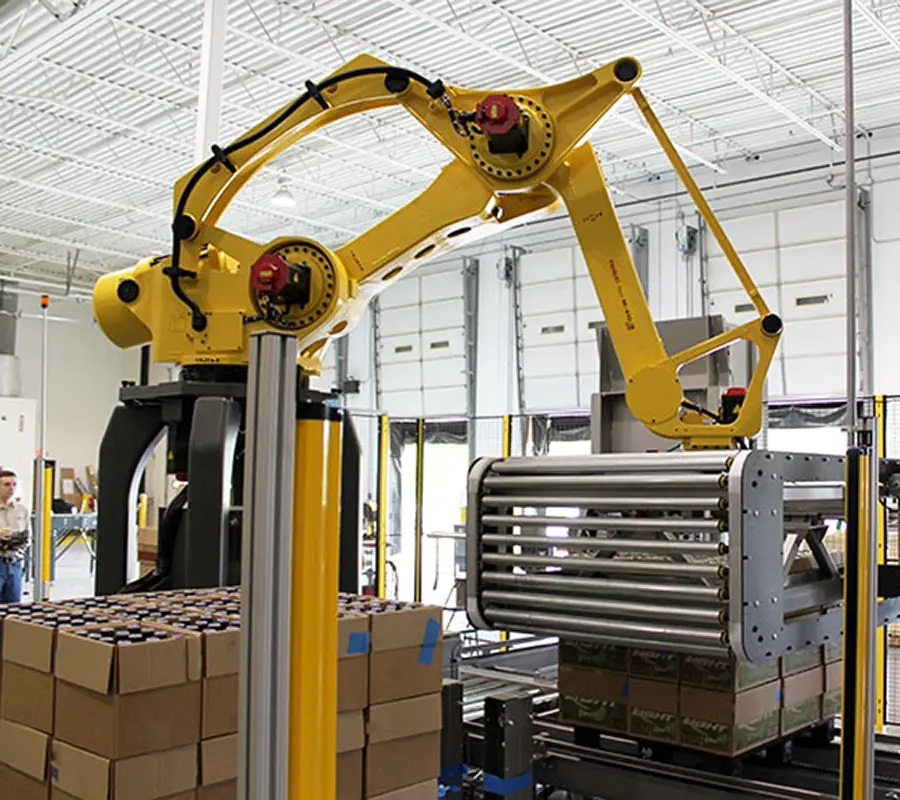
An automated robot arm handles crates and pallets on a conveyor system in an industrial warehouse.

Toyota Automated Logistics evaluates palletizing requirements to match the right automation approach to each application, considering product characteristics, throughput requirements, and layout constraints.

Common palletizing and depalletizing applications include:

  • Inbound receiving from floor-loaded containers
  • Food and beverage manufacturing
  • Consumer packaged goods distribution
  • Beverage and bottling operations
  • Building materials and bagged products
  • Pharmaceutical and healthcare distribution
  • E-commerce and retail fulfillment
  • Third-party logistics operations
  • Cold storage and temperature-controlled facilities

Frequently Asked Questions

What types of products can automated palletizers and depalletizers handle?

Systems can manage a wide variety of packaging, from cases and bags to pails and mixed‑SKU layers. The right solution depends on your product mix, dimensions, weight, and stability.


How do robotic palletizers handle products of different sizes?

Robotic palletizers use programmable end-of-arm tooling that adjusts grip width, vacuum zone activation, or clamp pressure for different case sizes. Pattern programming specifies placement coordinates for each product or row relative to others on the pallet. Changeover occurs through software selection rather than mechanical adjustment.


Can automated palletizing and depalletizing systems adapt to different product sizes or SKUs?

Yes. Modern palletizing solutions can handle frequent SKU changes, variable case sizes, and multiple patterns with minimal changeover time.


Can palletizing robots build mixed-SKU pallets?

Yes, robotic palletizers excel at mixed-SKU or rainbow pallet building. The system receives products in sequence and places each case according to the combined pallet pattern. This capability supports store-ready pallets, reducing handling at distribution centers and retail locations.


What maintenance do palletizing systems require?

Robotic palletizers require periodic lubrication, tooling inspection, and software updates, with typical maintenance intervals of 2,000-4,000 operating hours. Conventional palletizers have more mechanical components requiring regular adjustment and replacement. TAL includes maintenance schedules and training in all system implementations.


How do palletizing systems integrate with warehouse management systems?

Palletizing systems connect with your warehouse or production software to share the information needed to keep orders and material flowing. They receive basic instructions — such as what to build and when — and send back status updates so your operation always has real‑time visibility. TAL manages all integration work to ensure a smooth connection with your existing systems.

Navigate Your Automation Decisions with Confidence

Whether you're evaluating a single technology or planning a complete automation strategy, we help you choose reliable solutions that scale with your business.