

In modern warehouse environments, automation has transformed how materials are handled. Robotics, intelligent software, and autonomous systems have improved efficiency, accuracy, and throughput. Yet even as automation expands, the role of humans remains indispensable, bringing cognitive abilities and adaptability.
Success in today’s facilities depends on striking the right balance between human expertise and automated warehouse systems. Organizations that intentionally design collaboration between people and technology are better positioned to improve performance and remain competitive.
Industry 5.0 and Human-Robot Collaboration in Warehouse Operations
Industry 5.0 represents an evolution in manufacturing and logistics. While Industry 4.0 emphasized automation and connectivity, Industry 5.0 focuses on collaboration between humans and machines to achieve optimal outcomes.
In warehouse operations, this means integrating automation while empowering employees to oversee, interact with, and complement those systems.
Technologies such as robotic systems, conveyor networks, and autonomous vehicles, including AGVs and AMRs, now support tasks like picking, sorting, and transporting goods. These systems deliver speed, precision, and consistency, helping reduce errors and increase throughput. Advances in artificial intelligence and machine learning further enable continuous improvement as systems adapt to changing demand patterns.
At the same time, automation does not replace human capabilities. People bring:
- Critical thinking and decision-making
- Problem-solving in complex or unexpected scenarios
- Adaptability across multiple tasks
- Collaboration and communication skills
In dynamic warehouse environments, these human strengths are irreplaceable.
Best Practices for Balancing Material Handling Automation and Human Expertise
Achieving effective collaboration requires intentional design. The following best practices help ensure automation enhances, rather than disrupts, operations.
Augment Human Capabilities
Material handling automation is most effective when it supports people. By handling repetitive and physically demanding tasks, automated systems free employees to focus on higher-value responsibilities such as quality control, exception management, and customer-focused activities.
This shift can improve job satisfaction while elevating safety standards and operational performance.
Invest in Training and Upskilling
As automation becomes more advanced, workforce development becomes critical. Employees must be equipped to:
- Navigate automated systems
- Analyze operational data
- Interact safely and efficiently with robotic technologies
A structured training approach ensures a smooth transition and helps build a more resilient and capable workforce.
Optimize Human-Robot Interaction
Workflow design plays a central role in maximizing collaboration. Facilities should be organized to leverage the strengths of both humans and machines.
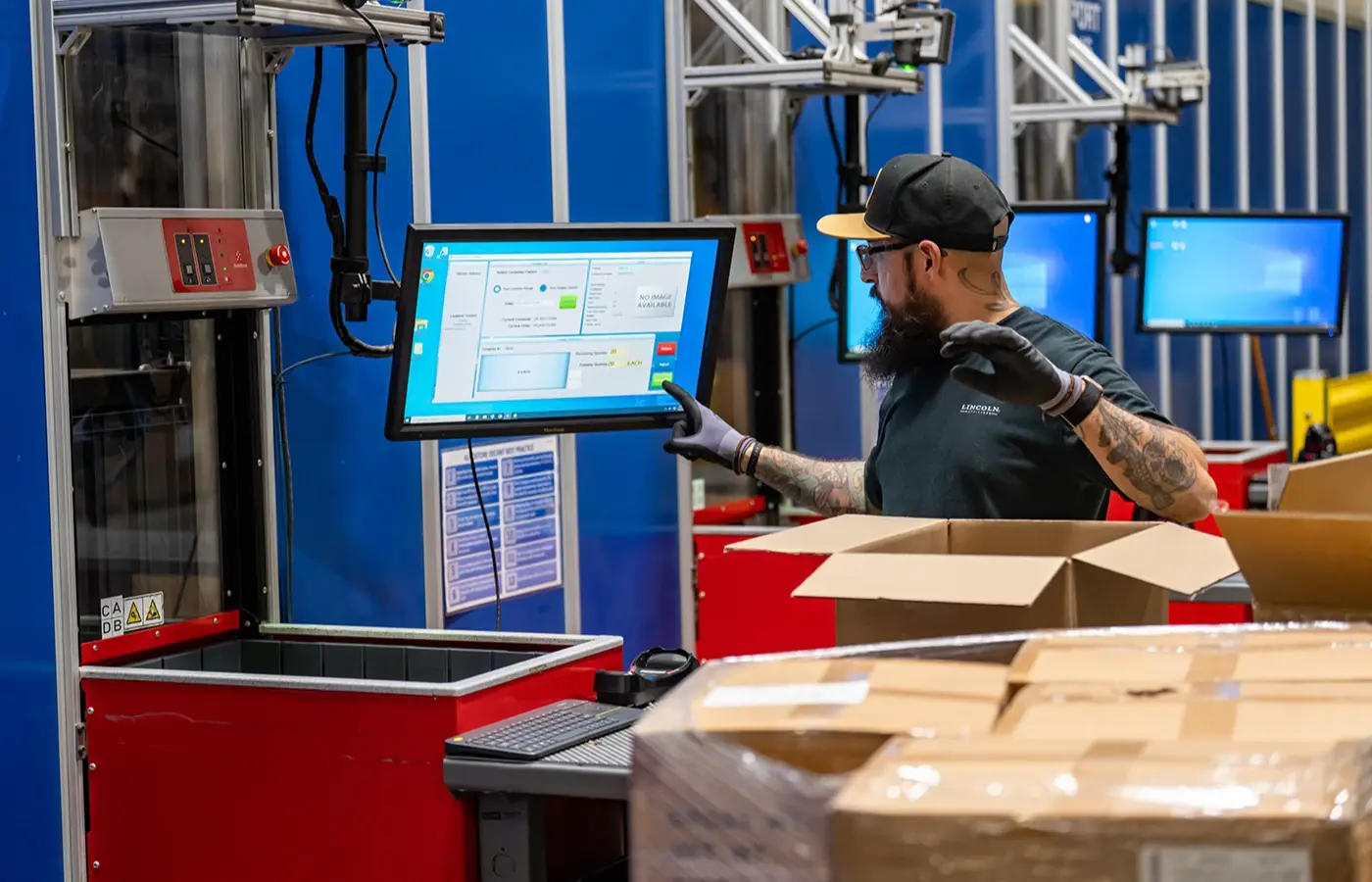
Automated systems should feature user-friendly interfaces and transparent communication tools that support operator oversight. At the same time, employees should be encouraged to provide feedback, suggest improvements, and actively participate in continuous optimization efforts.
A collaborative workspace that values both creativity and precision fosters innovation and long-term efficiency.
Collaborative Warehouse Technologies in Action
Modern warehouse ecosystems often integrate multiple technologies to create seamless human-automation collaboration.
Conveyors streamline the movement of goods between warehouse zones, reducing manual transport and improving flow. Automated Storage and Retrieval Systems (AS/RS) maximize storage density and accelerate order fulfillment by automatically retrieving items as needed.
Autonomous vehicles transport goods throughout the facility. When paired with collaborative robots (cobots), these systems assist with picking, packing, and material handling while working safely alongside human operators.
In a typical workflow:
- An order is received.
- The AS/RS locates and retrieves required inventory.
- Autonomous vehicles transport items to designated workstations.
- Cobots assist with handling tasks while employees oversee quality, manage exceptions, and ensure accuracy.
This integrated approach improves throughput and accuracy while reducing errors and supporting labor efficiency. More importantly, it creates a flexible operating model that can adapt to changing volumes and evolving customer expectations.
Designing Human-Automation Collaboration for Long-Term Warehouse Performance
Successful automation begins with a clear understanding of operational workflows and business objectives. The goal is to identify where technology can strengthen performance and reduce strain on the workforce.
By applying robotics, intelligent software, and data-driven systems in practice, organizations can build solutions that are technically sound and intuitive for operators. Adoption improves when systems are designed with the end user in mind.
Continuous improvement remains central. As operations evolve, automated systems should evolve with them. When human expertise and automation are aligned, warehouses gain flexibility, resilience, and sustainable efficiency.