

Warehouse automation is entering a new phase defined by greater clarity around where automation delivers the most value. As labor availability, space constraints, and service expectations continue to shape operations, organizations are taking a more strategic approach to automation investment, focusing on solutions that improve performance today while remaining adaptable for tomorrow.
Understanding how the market is evolving and where automation is making an impact provides important context for making confident, future-ready decisions.
Why Market Conditions Matter for Warehouse Automation Decisions
Over the past several years, the global warehouse automation market has remained relatively stable, with an estimated annual value of around USD 30 billion. That stability, however, has not come without challenges. Geopolitical tensions, tariff pressures, higher interest rates, and inflation have all influenced how and when companies choose to invest.
According to Interact Analysis, global economic uncertainty peaked in early 2025 before easing somewhat later in the year. In response, many organizations have taken a more deliberate approach to capital investments. Even so, a significant number of automation projects have progressed beyond the planning phase.
Large-scale initiatives continue to be driven by industries such as food manufacturing and retail, where automation plays a critical role in meeting throughput and reliability demands. At the same time, non-cyclical sectors, including pharmaceuticals and parts distribution, have helped keep order books active.
On the technology front, robotics and automated mobile robots (AMRs) remain strong growth areas. The market, however, is becoming more mature. Rather than broad experimentation, companies are increasingly focused on deploying automation where it delivers clear operational value and measurable return on investment.
Understanding the Shift to Sustainable Automation Growth
In the years leading up to and during the COVID-19 pandemic, warehouse automation providers experienced double-digit growth, primarily driven by the rapid expansion of e-commerce. Today, the market is transitioning into a phase of steady, more realistic growth.
At Toyota Automated Logistics, overall warehouse automation growth is estimated at approximately 8% annually, which is consistent with projections from Interact Analysis and Style Intelligence. This pace reflects a healthier balance between innovation and investment discipline.
E-commerce is also regaining momentum after some flat years. In 2025, the global e-commerce market was valued at approximately USD 3.66 trillion and is expected to grow at a compound annual rate of 6.3% through 2030. As volumes rise, so does the need for scalable, flexible fulfillment operations.
Key Operational Challenges Driving Warehouse Automation Today
Labor Availability Remains a Daily Challenge
Labor shortages remain one of the most persistent issues facing warehouse operations worldwide. In many regions, unemployment rates remain low, and warehouse roles are often viewed as physically demanding and challenging to staff consistently.
Order volatility adds another layer of complexity. A facility may need 200 people one day and significantly fewer the next, making workforce planning an ongoing balancing act rather than a predictable exercise. In this environment, automation is increasingly seen as a way to stabilize operations, reducing reliance on variable labor pools while supporting safer, more ergonomic workplaces.
Space Constraints Are Reshaping Facility Strategies
Warehouse vacancy rates have increased in some markets, placing downward pressure on rents. And finding land for new facilities remains difficult, particularly near urban centers. Interact Analysis expects warehouse construction to contract slightly in 2025 compared to the previous year.
As every cubic meter becomes more valuable, organizations are turning inward to maximize the space they already have. Brownfield sites and unconventional facilities, such as former retail locations, parking structures, and post offices, are increasingly being repurposed into logistics hubs. These environments often lend themselves well to automation technologies designed to adapt to irregular layouts rather than impose rigid designs.
Economic Uncertainty Influences Automation Decisions
Ongoing economic uncertainty continues to shape how businesses plan for the future. Shifts in consumer demand, product assortments, and sales channels make it difficult to predict volume and throughput requirements with precision.
As a result, many organizations are favoring modular, scalable automation solutions that allow them to adjust over time. Flexibility has become a safeguard against uncertainty, enabling warehouses to evolve without overcommitting to fixed configurations.
Aligning Operational Needs with Automation
Improving Productivity Under Rising Cost Pressure
With labor, energy, and material costs continuing to rise, warehouses are under constant pressure to increase output without increasing overhead. Automation has become a practical response to that reality, not a replacement for people, but a way to support them.
Goods-to-person systems improve picking efficiency, while robotic solutions continue to advance in accuracy, speed, and handling capabilities. Robots are also taking on more physically demanding tasks, such as unloading trucks and transporting goods across facilities - reducing manual strain and supporting safer, more ergonomic workplaces.
Making Better Use of Available Space
Shuttle-based systems and other high-density automation solutions allow organizations to significantly increase throughput within existing buildings, often reducing or eliminating the need for new construction.
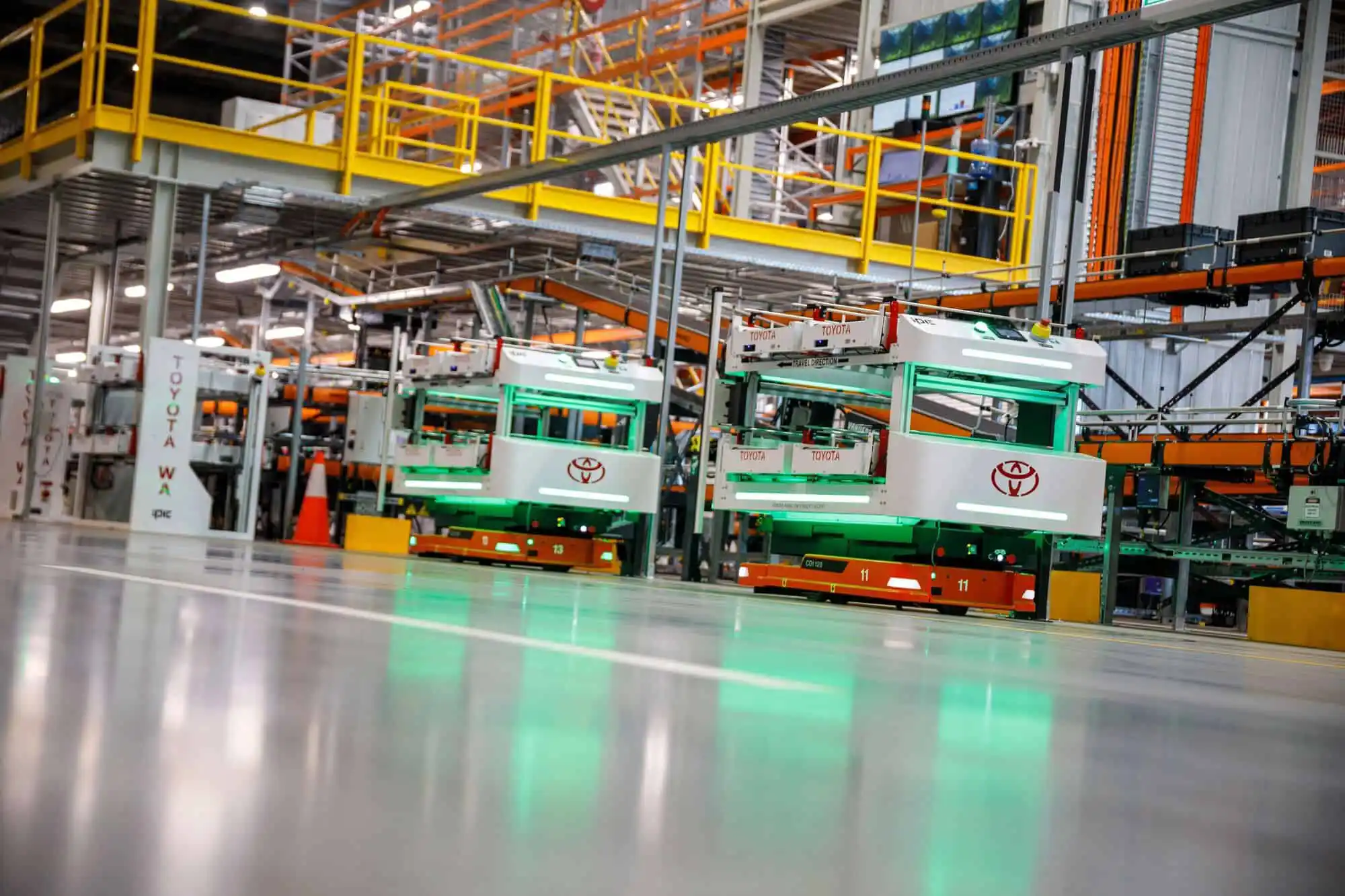
In space-constrained or repurposed facilities, automation technologies such as AMRs offer added flexibility. Their ability to operate efficiently in non-traditional layouts makes them well-suited to environments not originally designed for logistics operations.
Designing Automation Systems for Flexibility and Scalability
Flexibility has become a baseline expectation in warehouse automation. Operators are looking for systems that can scale incrementally, such as adding racking to a shuttle system or deploying additional mobile robots as volumes grow.
Scalability goes hand in hand with adaptability. Solutions that enable rapid integration of technologies such as robotic item picking and AMRs allow warehouses to respond quickly to seasonal peaks, promotions, and shifting demand without disrupting day-to-day operations.
Technology Enablers Supporting Modern Automation
Sustainability and Resilience as Core Design Principles
Sustainability is a central consideration in warehouse automation strategies. Energy-efficient conveyors, optimized drive systems, and intelligent energy management solutions help reduce consumption and emissions while maintaining performance.
Packaging innovation also plays a role, enabling tighter load configurations that reduce empty space, lower transport volumes, and cut fuel use. Beyond environmental impact, sustainability increasingly includes people. Ergonomic workstations, safer designs, and improved workplace comfort are essential for attracting and retaining talent in a competitive labor market.
As operations become more digital, cybersecurity has emerged as a critical component of resilience. Protecting data, systems, and connected equipment is now fundamental to business continuity and long-term trust.
Why System Integration Is Critical as Automation Scales
As warehouses adopt more robotics, AMRs, and automated equipment, seamless integration has become essential. Customers increasingly expect end-to-end solutions that connect warehouse management systems with automation technologies.
Warehouse Execution Systems (WES) and Warehouse Control Systems (WCS) play a key role in orchestrating these environments, enabling real-time coordination between people, machines, and processes.
Advancing Digital Capabilities with AI
Artificial intelligence adoption in warehousing continues to accelerate. While approximately 28% of organizations currently use AI, more than half plan to adopt it within the next five years, according to MHI and Deloitte.
AI-powered vision systems are improving robotic picking by enabling machines to learn and adapt to new products. Predictive maintenance is another growing application that uses equipment performance data to identify potential issues before failures occur, helping improve uptime and overall operational efficiency.
Designing Warehouse Automation for Long-Term Adaptability
The future of warehouse automation is not defined by any single technology. It is shaped by how effectively organizations balance performance, flexibility, and resilience in an uncertain environment.
As labor constraints persist and operational demands continue to evolve, the focus is shifting from predicting what comes next to building systems that can adapt when it does. For warehouse and distribution leaders, understanding these trends and how they intersect remains key to making informed, future-ready automation decisions.
Sources and further reading
- Mobile robot market slashed: tariffs and uncertainty take their toll
- Warehouse automation market mid-year check: strong start stalls amid economic uncertainty
- e-commerce – Worldwide: Statista market forecast
- Market research report MHE system integrators 2025 – STIQ Ltd
- Mini report: future of warehouse automation 2025 – STIQ Ltd
- Fraunhofer: WMS market report compact 2024
- 2025 Intralogistics Robotics Study – Material Handling 24/7
- New MHI and Deloitte report focuses on orchestrating end-to-end digital supply chain solutions